Elleny Gherghe
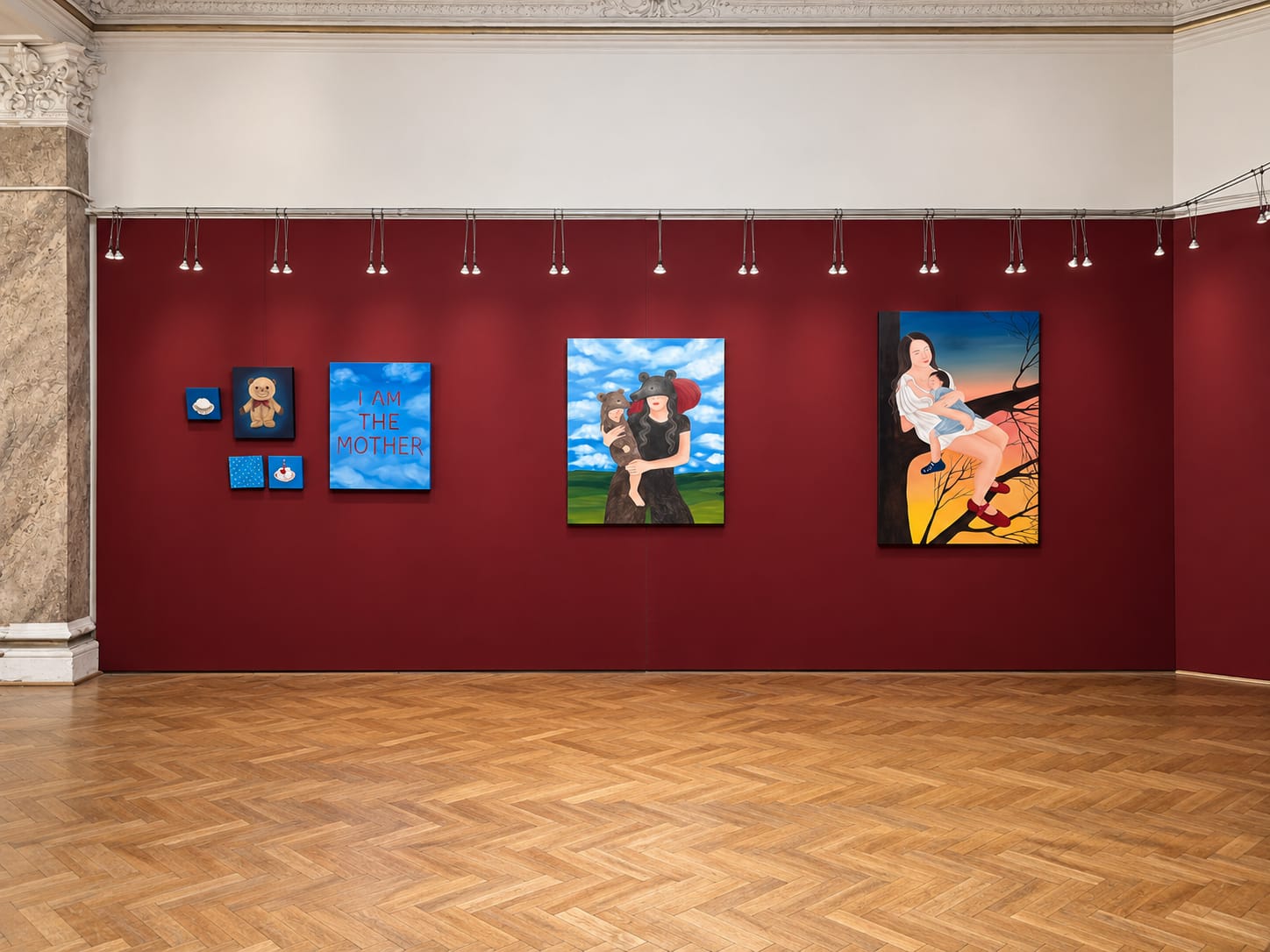
Installation view of Motherhood and the Beast Within at Ghika Palace

Motherhood and the Beast Within

Elleny Gherghe — Solo Exhibition · On view

1–30 September 2026

← All Exhibitions

Motherhood and the Beast Within

Ioana Ciocoiu, curator

Elleny Gherghe — Solo Exhibition

On view

1–30 September 2026

Museum of Ethnography and Contemporary Art

Dimitrie N. Ghika, Ghika Palace, Comănești, Romania

Vernissage

1 September 2026, 17:00

Museum of Ethnography and Contemporary Art Dimitrie N. Ghika

Ghika Palace, Comănești, Romania

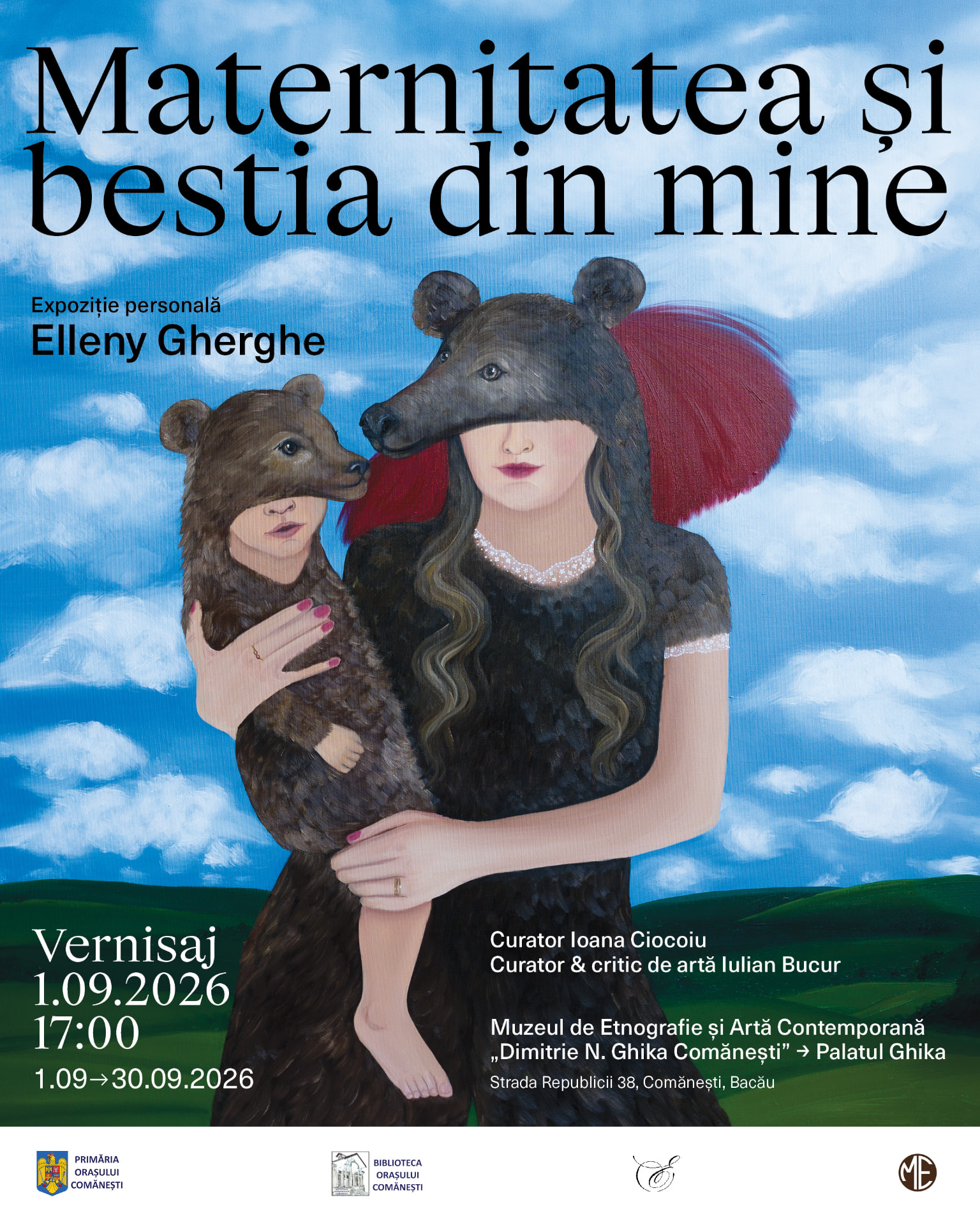
Official poster for Motherhood and the Beast Within, exhibition by Elleny Gherghe

Motherhood and the Beast Within is a solo exhibition by Elleny Gherghe, presented from 1 to 30 September 2026 at the Museum of Ethnography and Contemporary Art Dimitrie N. Ghika, Ghika Palace, Comănești, Romania.

Few images in the history of art have undergone a process of idealization as extensive as the image of motherhood.

From ancient representations to Renaissance depictions of the Madonna and Child, from Gustav Klimt’s The Three Ages of Woman to Nicolae Tonitza’s Motherhood, motherhood has crystallized in the collective imagination as a space of protection, unconditional love and tenderness.

A perfect harmony between the maternal body and the fragile body of the child has become firmly established in our cultural imagination.

But what happens to everything that is lived but cannot be contained within this perfect image?

Elleny Gherghe’s exhibition Motherhood and the Beast Within marks a turning point in the representation of motherhood in the history of art. The exhibition does not approach motherhood from the outside, from the perspective of external observers, but from within the lived experience of the woman who becomes a mother — a woman who experiences intense emotions, sometimes even contradictory to the culturally constructed ideal of the mother.

From the very title of the exhibition, the artist approaches this reality courageously by bringing together two seemingly incompatible terms: motherhood and the beast.

The first evokes care and tenderness; the second, instinct, wildness and the impossibility of maintaining self-control when the protection of one’s child is at stake.

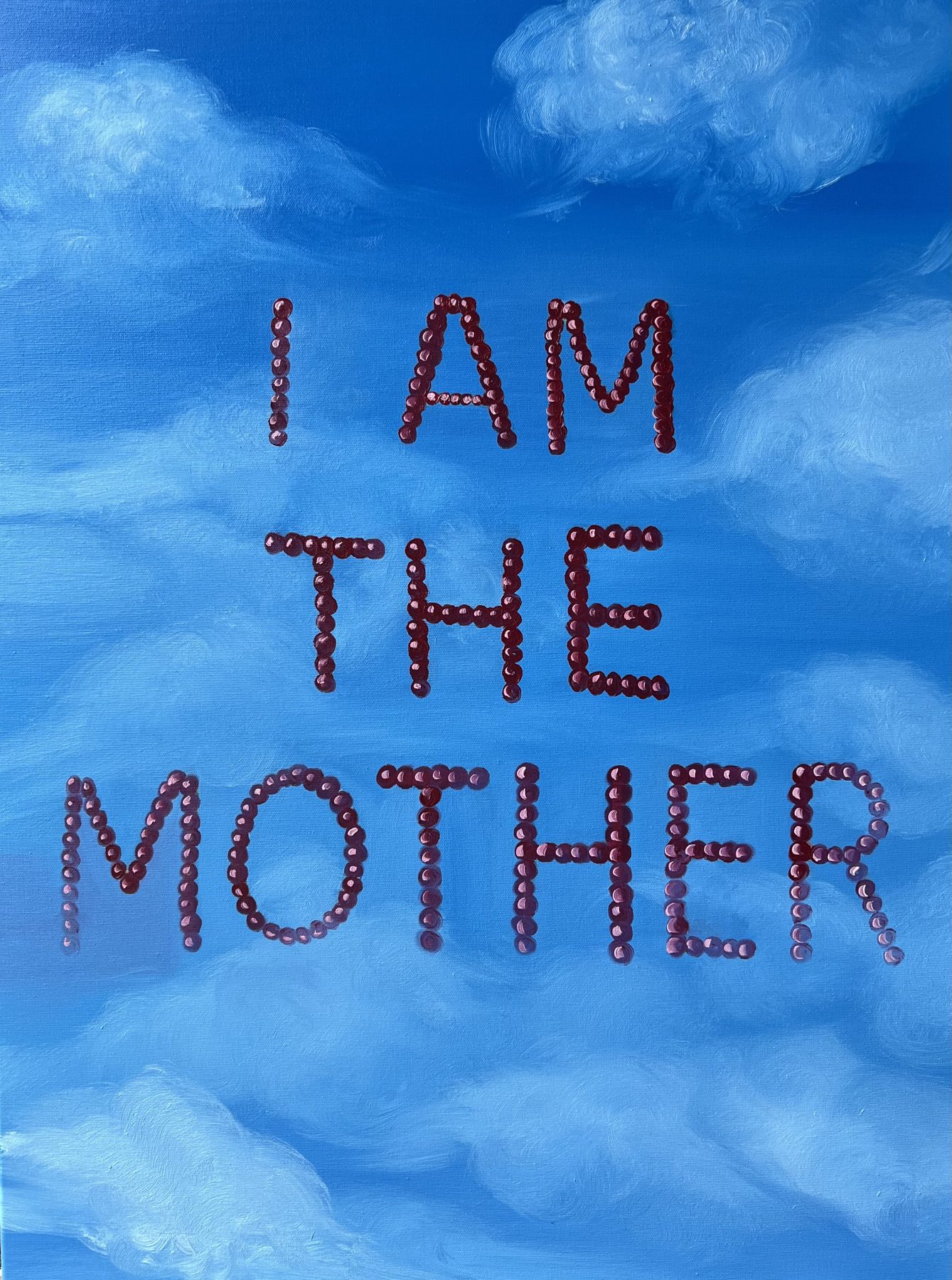
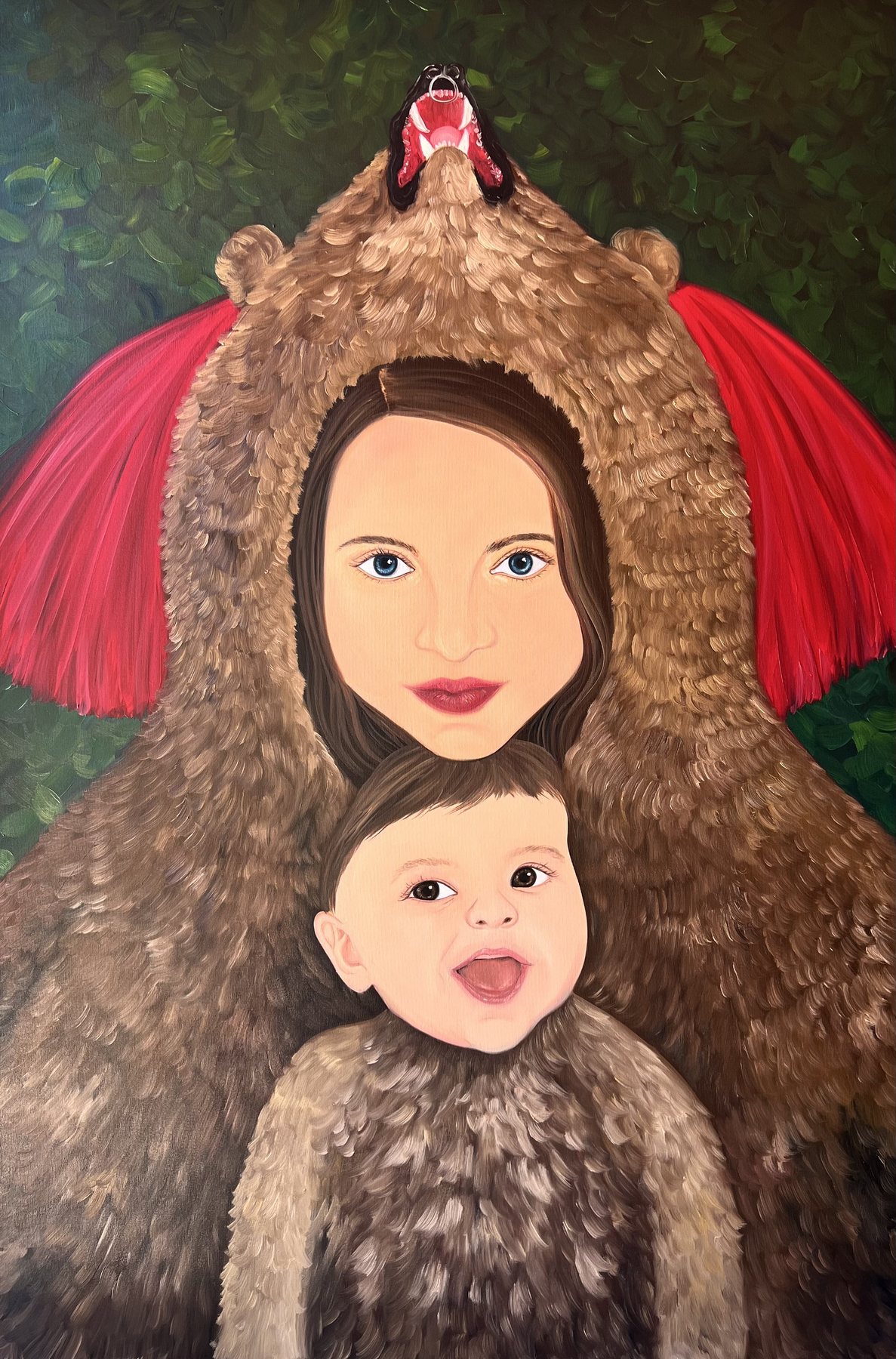
Motherhood is no longer only about mother and child. It is about what a woman becomes when she becomes a mother.

By addressing this culturally sensitive subject and taking a clear position, Elleny’s painting enters a broader conversation about the representation of motherhood.

On the one hand, the exhibition can be read through a hermeneutic lens that places Elleny among contemporary women artists who courageously deconstruct the metanarrative of idyllic motherhood, alongside Louise Bourgeois, Carrie Mae Weems and Judy Chicago.

Louise Bourgeois’s Spider, for example, offers a direct correspondence with the image of the beast: a gigantic arachnid that instinctively protects its offspring, unleashing everything wild and visceral within the mother.

Within this framework, the animal imagery in Elleny’s artistic universe does not animalize women in order to distance them from the human. Instead, it retrieves a dimension that cultural representations of femininity and motherhood have often attempted to discipline: instinct.

Curatorial text — Ioana Ciocoiu
With Cutting Honesty, About an Exhibition Like No Other

Art historian and art critic Iulian Bucur

A title such as Motherhood and the Beast Within can only intrigue. Painter Elleny Gherghe brings together two powerful and seemingly contradictory semantic nuclei. Two instinctive states frame the visual propositions of the exhibition at the Ghika Museum: mother and beast, angel and creature.

For the superficial viewer, these two states might appear to belong to different pages of the great atlas of psychology. Yet, in the painter’s understanding and representation, they share, somewhere in the abyss, the same origin and the same measure; only their meanings diverge.

This is because Elleny speaks about her own motherhood, with all its inherent fears, doubts and uncertainties. For the painter, motherhood is a sum of states — all of them new, none previously experienced, all understood only after they have been intensely lived through and endured.

It is a sum that activates every form of being that a woman possesses, or imagines herself to possess, within her motherhood — both sacred and profane — from living, plasmatic matter to an unstable, evanescent spirit.

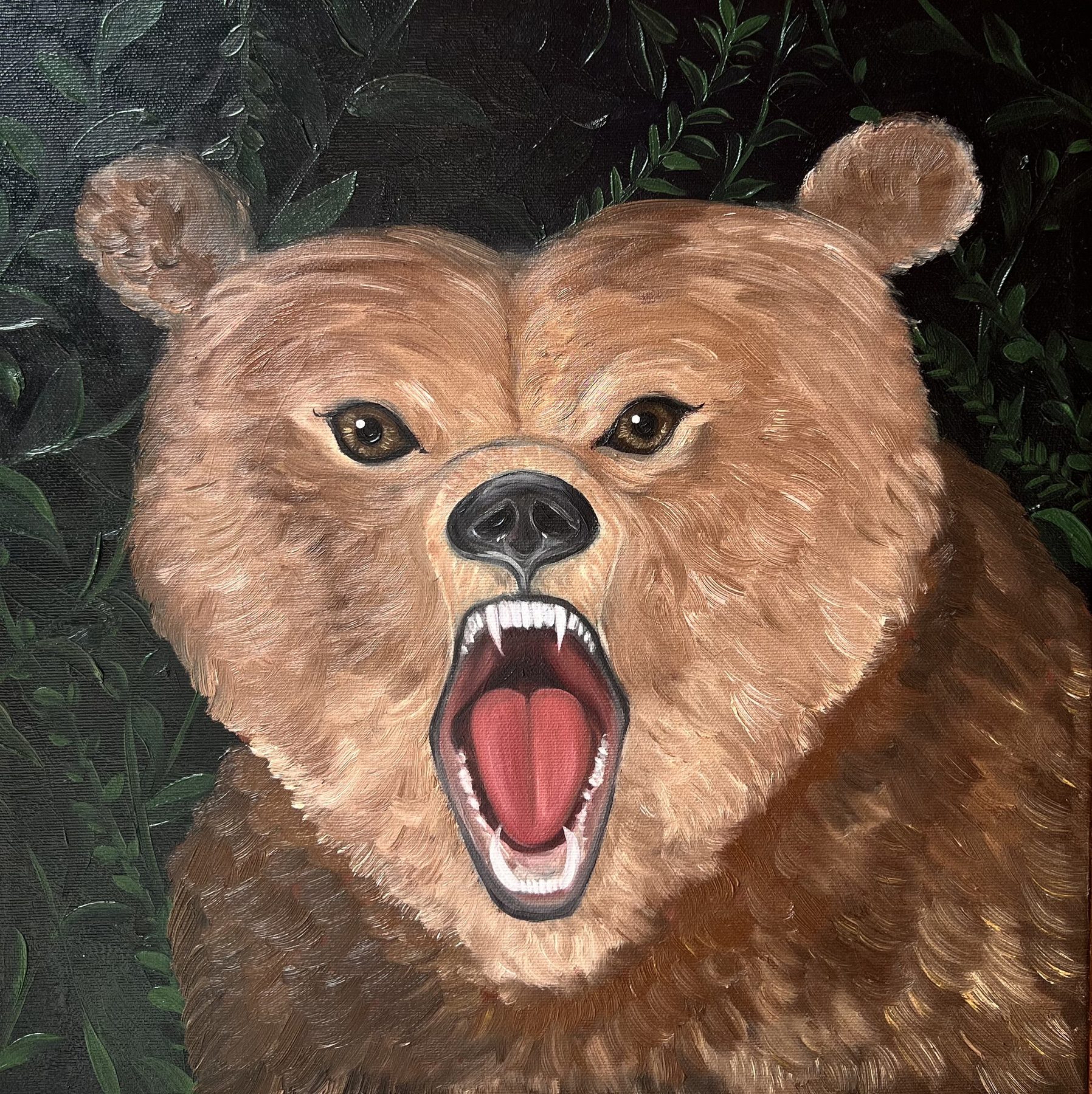
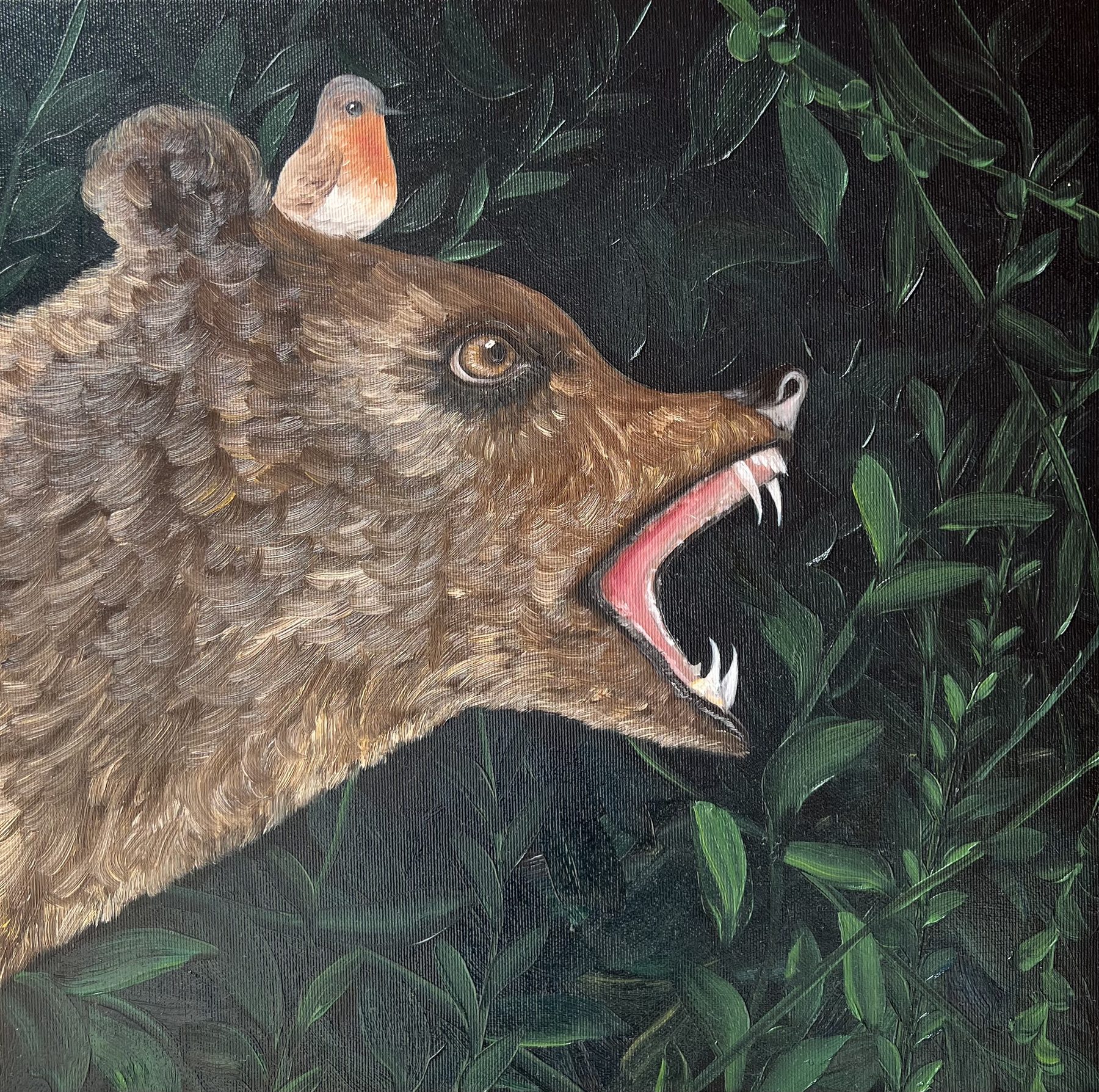
Among all these states, one secret form of maternal being is the beast: a state of grace in which the mother focuses her reason and emotions, her energy and determination, on protecting her child from real or imagined dangers.

Most of the compositions are centrally structured. Low horizons divide broad expanses in which vibrant areas meet flatter ones. Something of the academic tradition of mural painting can be found in all the backgrounds.

The eternal theme of motherhood, mother and child, seeks symmetry and balance. The visual impact is immediate; the character is solemn, almost icon-like, reminiscent of Byzantine icons.

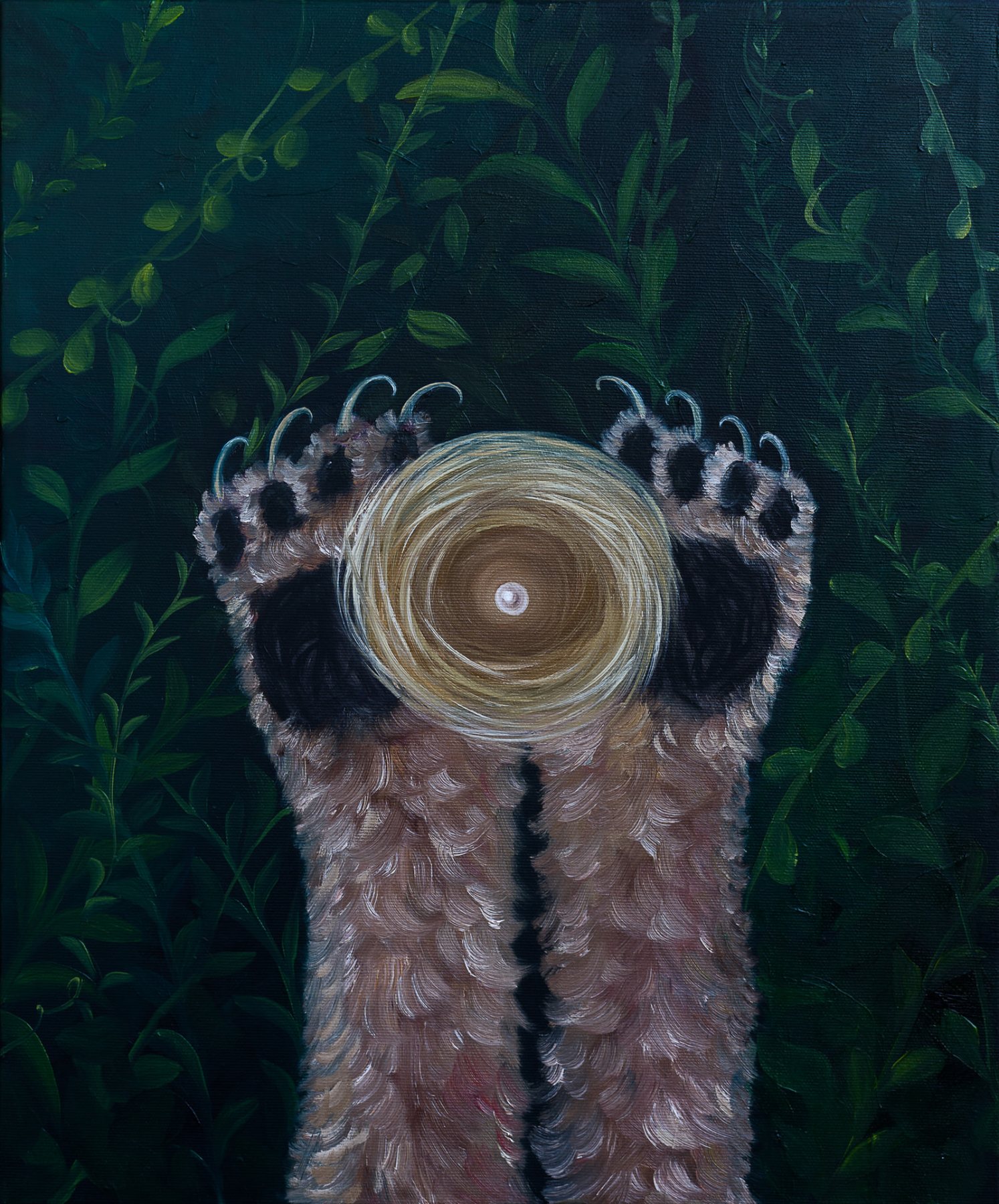
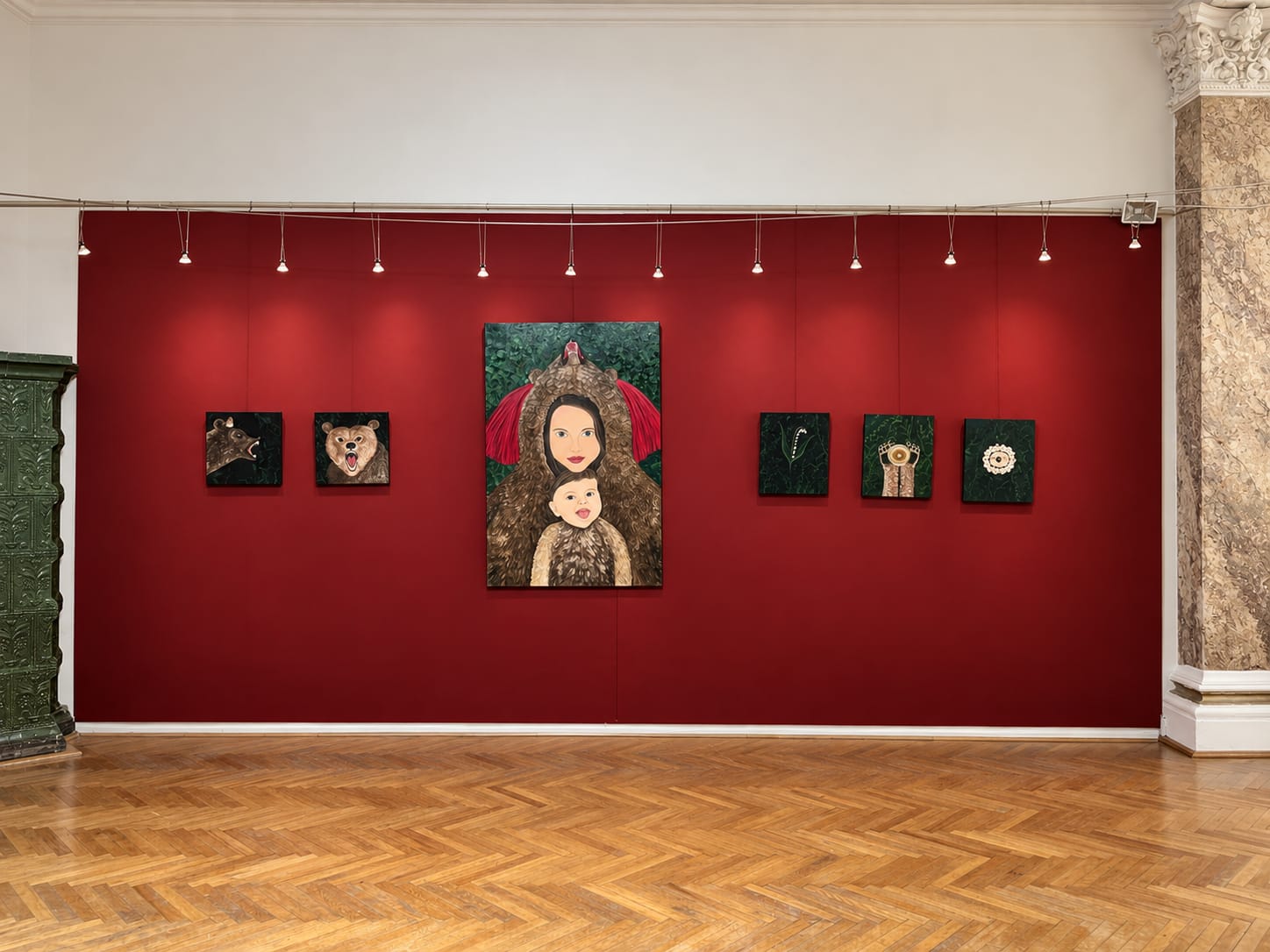
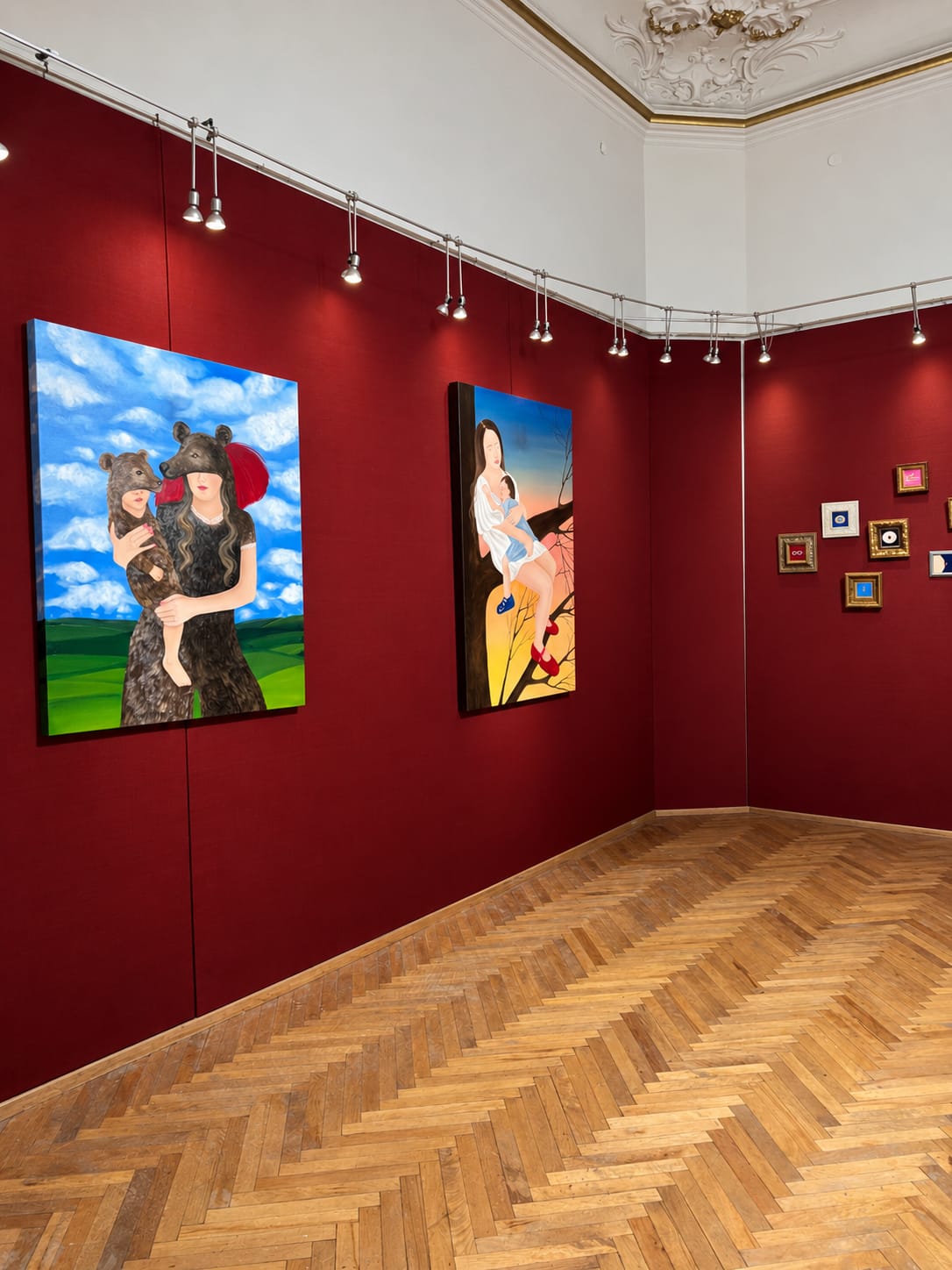
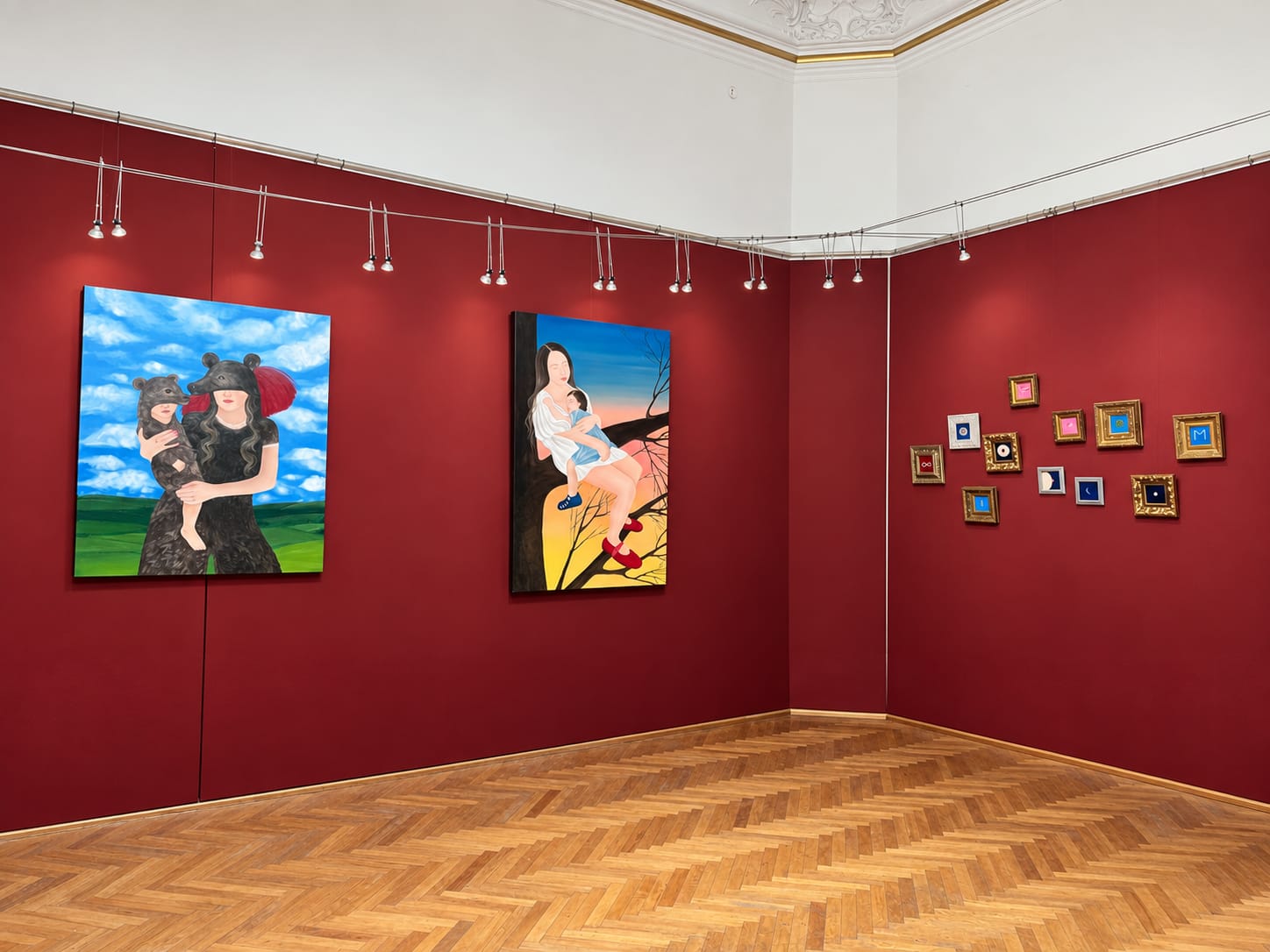
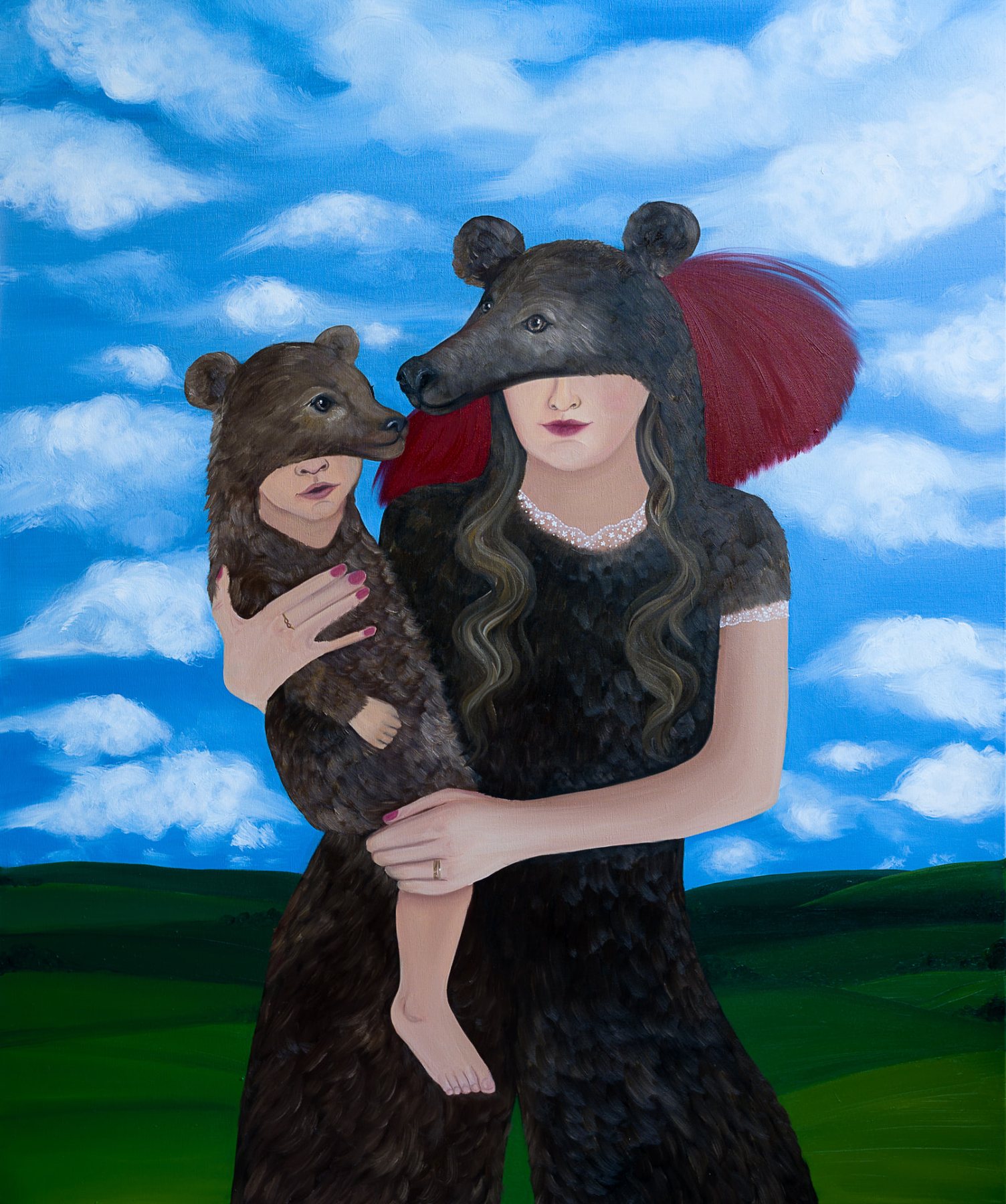
The mother-bear’s right hand gently surrounds the body of the bear cub. Beneath the undefined, brown bestial profiles, the lighter enamel of the anthropomorphic forms emerges — carefully articulated portraits and self-portraits.

Through these self-portraits, the entire spectrum of emotions experienced by a mother beside her child unfolds almost cinematographically.

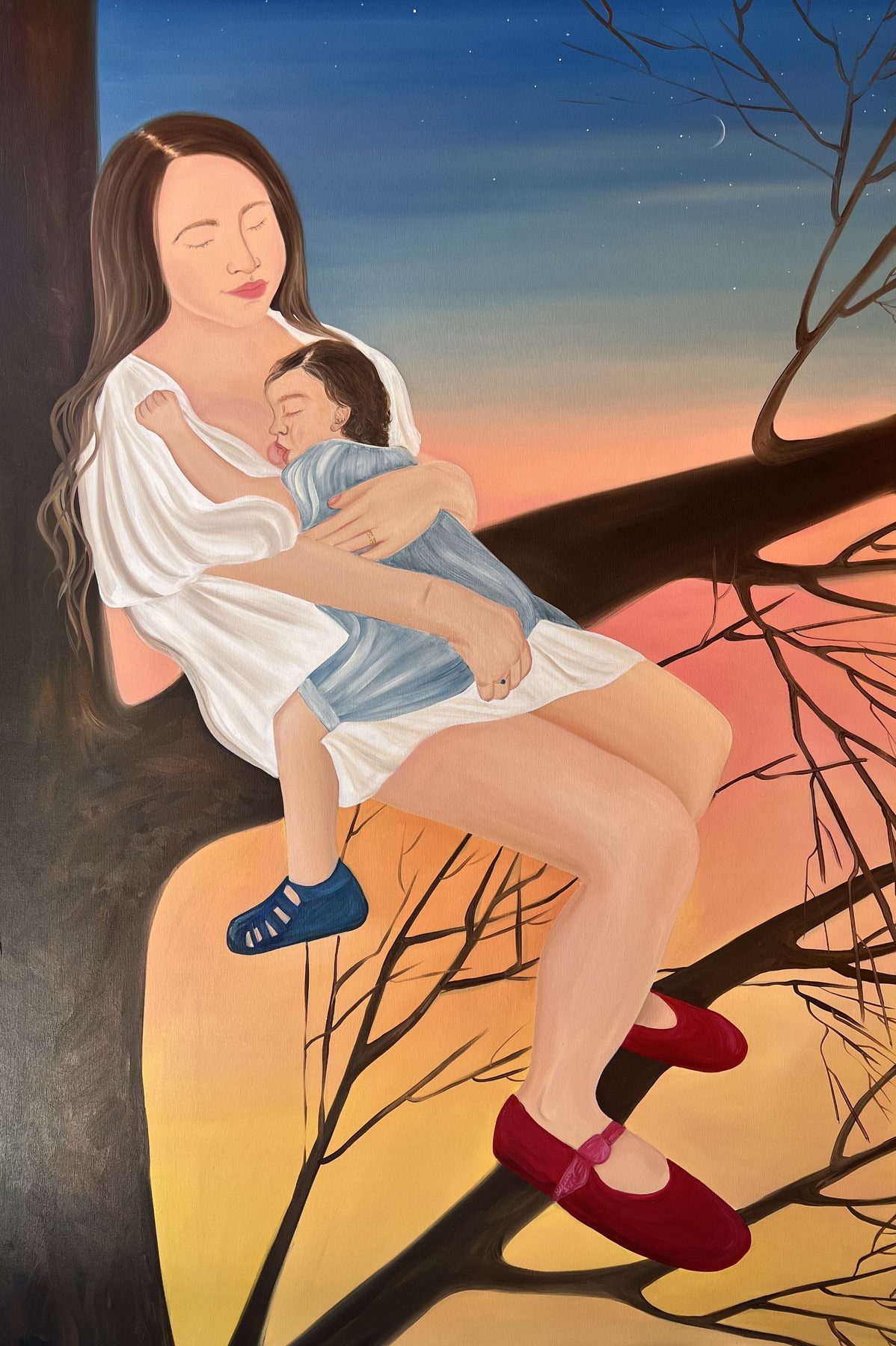
Particularly moving is the mother breastfeeding her child high in a tree, perhaps in the Tree of Life, above the world, from which only flames of light remain.

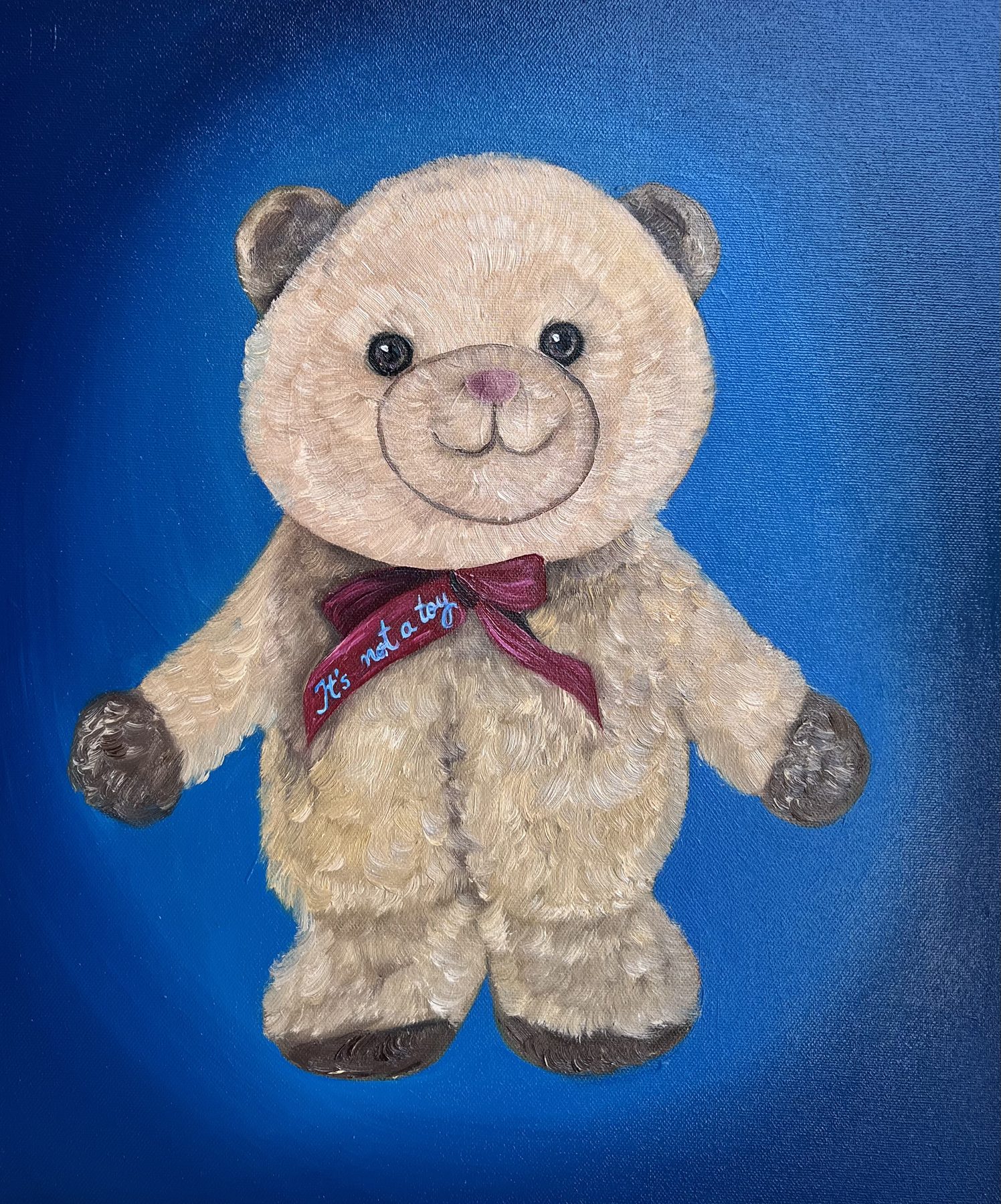
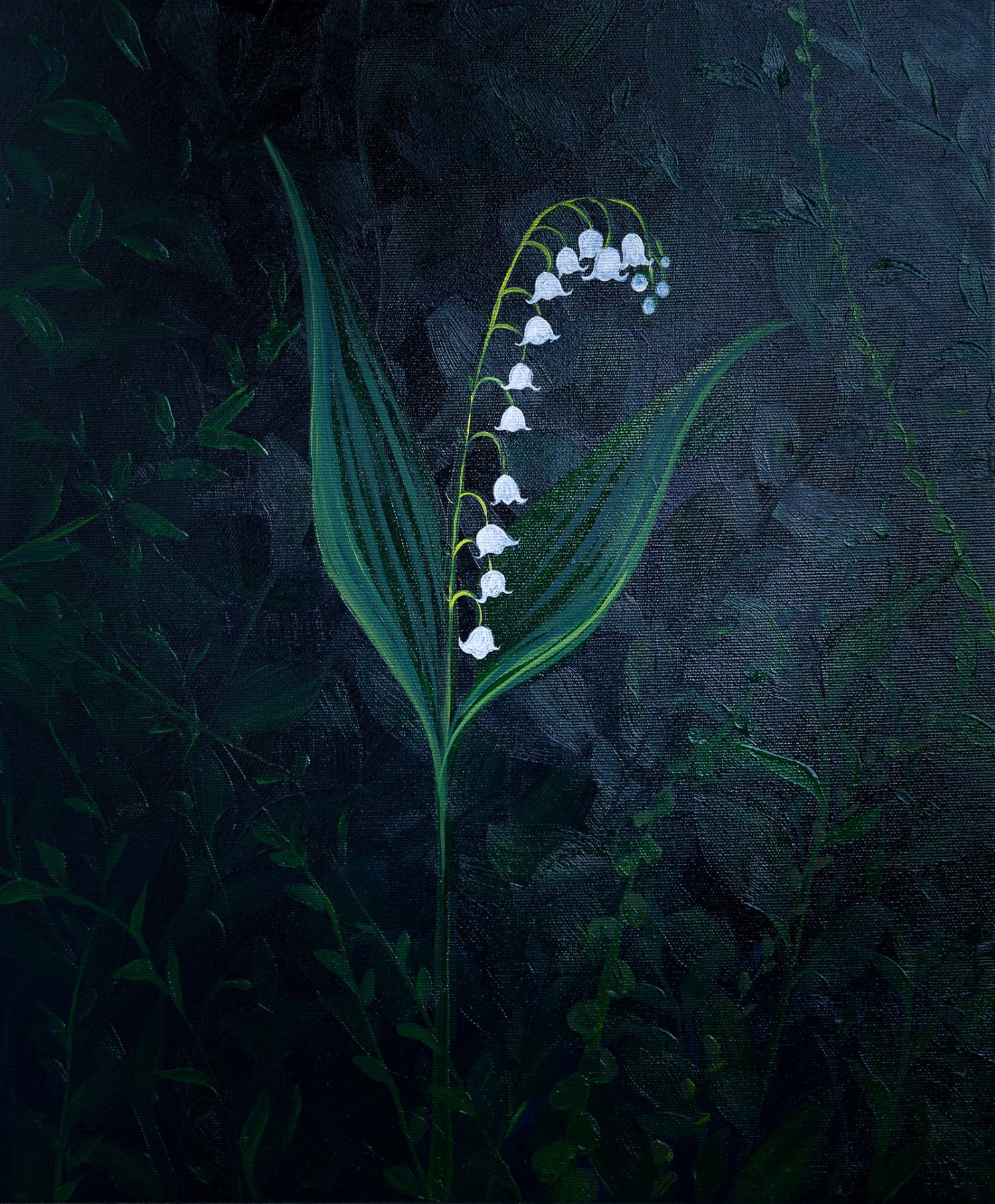
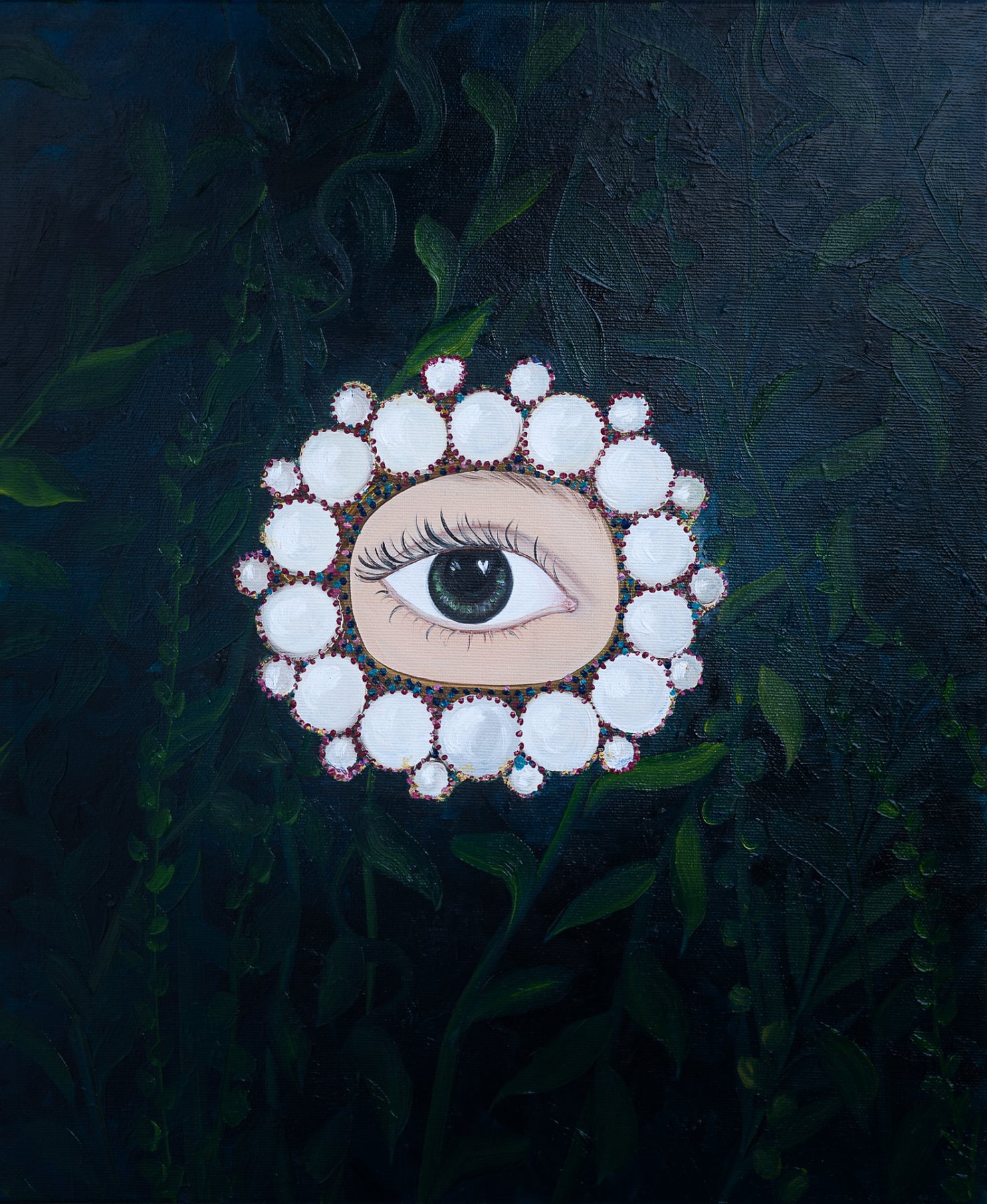
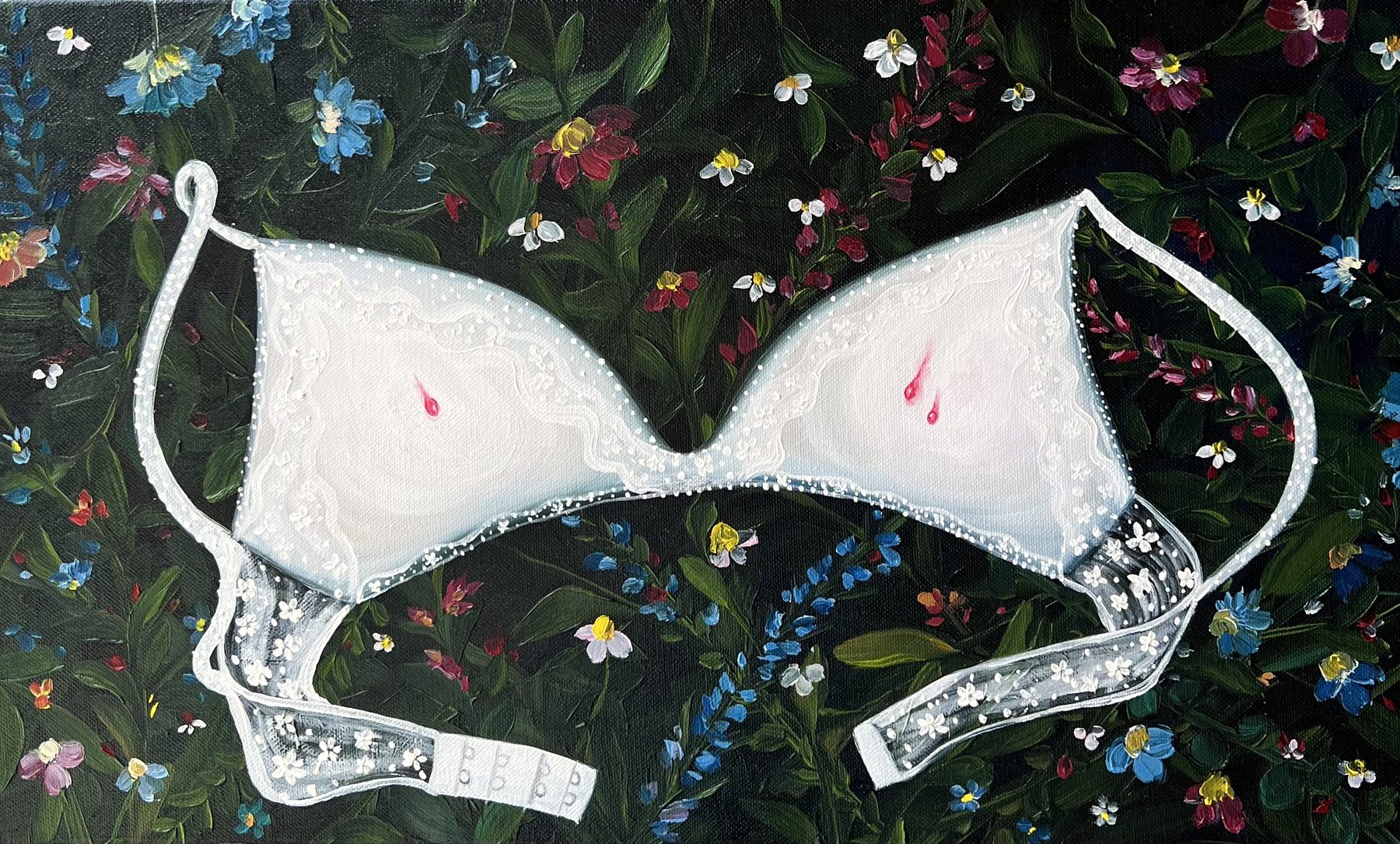
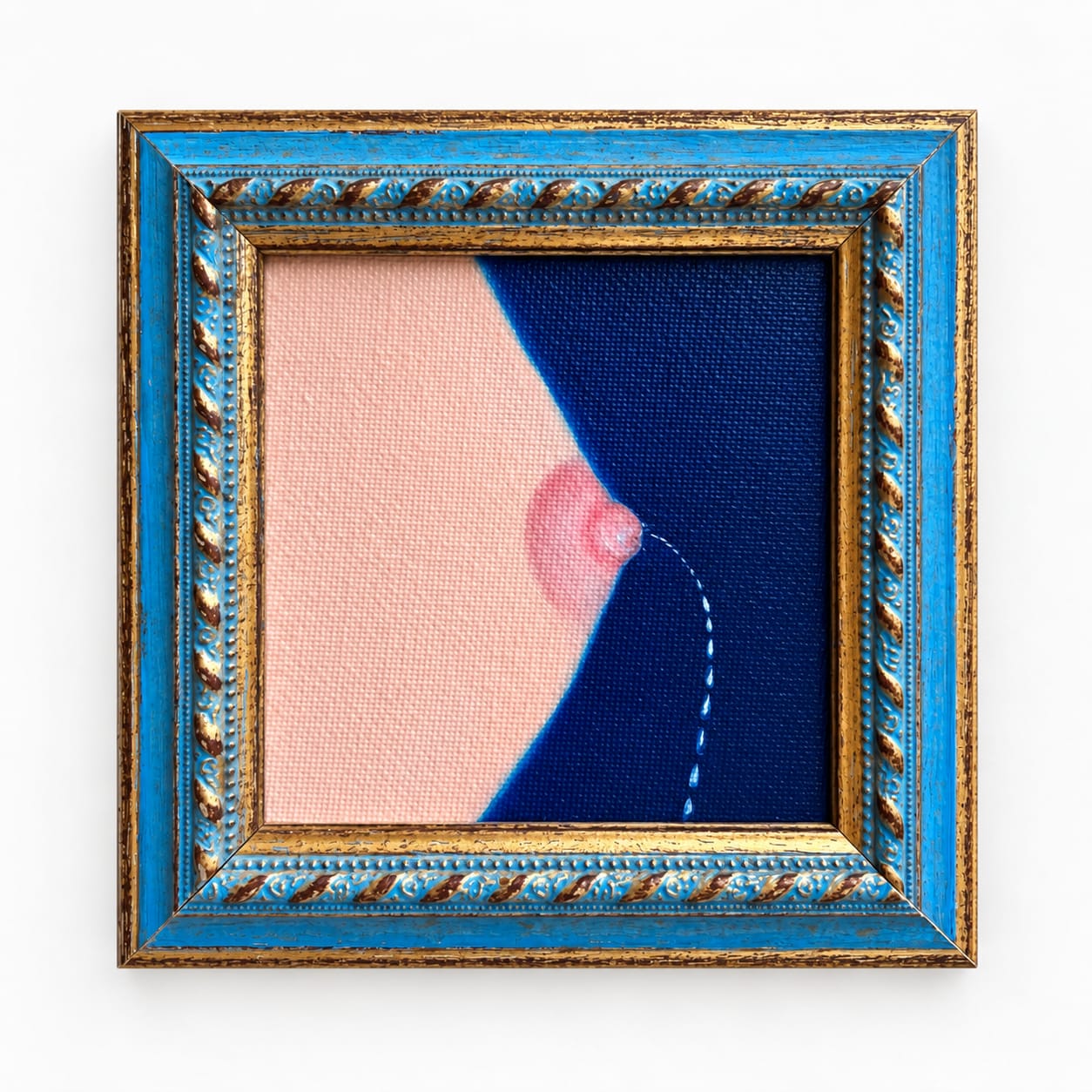
The painter is attentive to details, transforming them into symbolic anchors. They construct the message of the exhibition. Open palms, wide eyes, clear foreheads, bear claws, the breasts of the martyr Olalla, symmetrical drops of breast milk, drops of blood and everlasting flowers all testify to the many questions a mother asks without finding an answer.

And these same terrible details speak of the many questions that wound a mother, questions for which she has neither the time nor the strength to find an answer.

Because she is herself — and he is her child.

In the Trotuș Valley, the wildness of the bear carries a meaning unlike anywhere else in the world. The totemic animal presides over the impenetrable forests through strength, courage and, perhaps, inner stillness.

The Ghika family of Comănești was known for the royal bear hunts they organized. And there is probably no descendant of the beaters who once guarded this frontier who has not, at least once, worn a bear skin, like the White Moor in Creangă’s tale.

Today, the image of the bear-man performing during the New Year celebrations appears in major photography magazines.

On Dragobete, the mother bear brings her cubs out of the snow. The cubs are small, almost blind and completely dependent on their mother, who is weakened and hungry, yet determined to survive.

She feeds them with her warm milk and endures their bites. She warms them with her body, and the cubs trust her. She protects them and teaches them how to climb the trees of the forest and how to hunt.

And they will love her. They will love her even after that day — the day that inevitably comes, when the forest, like every wild forest, will separate them.

Curatorial text — Art historian and art critic Iulian Bucur

Works

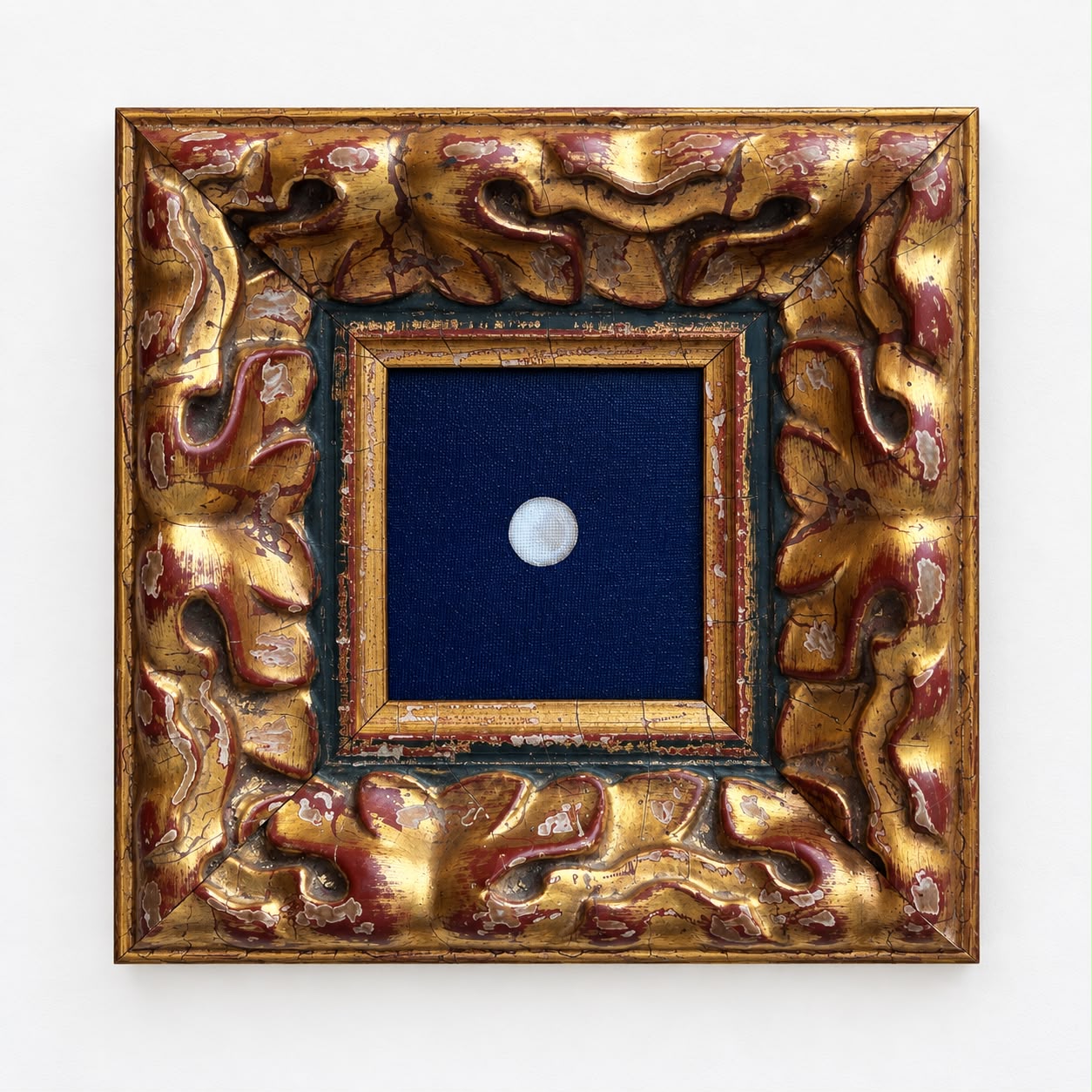
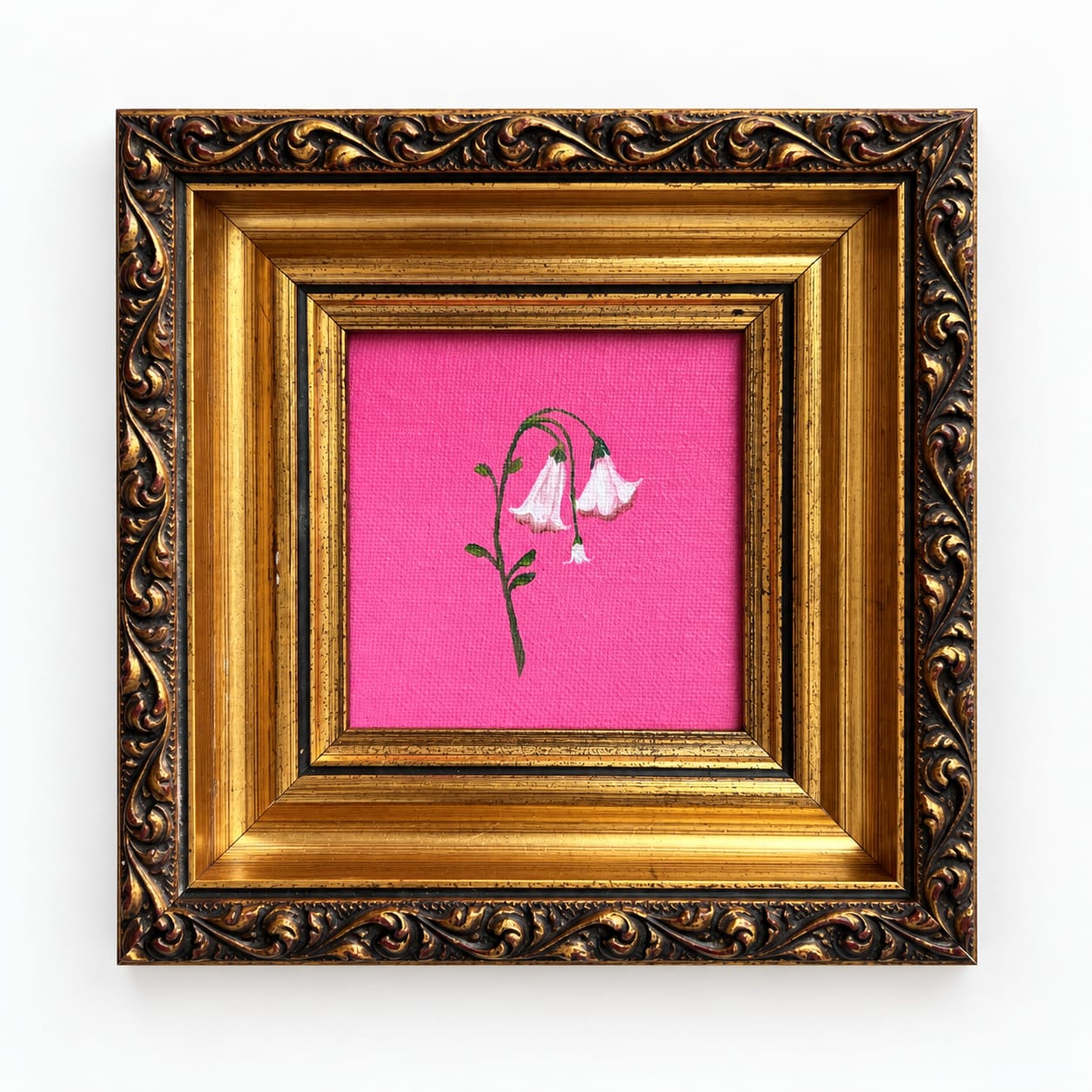
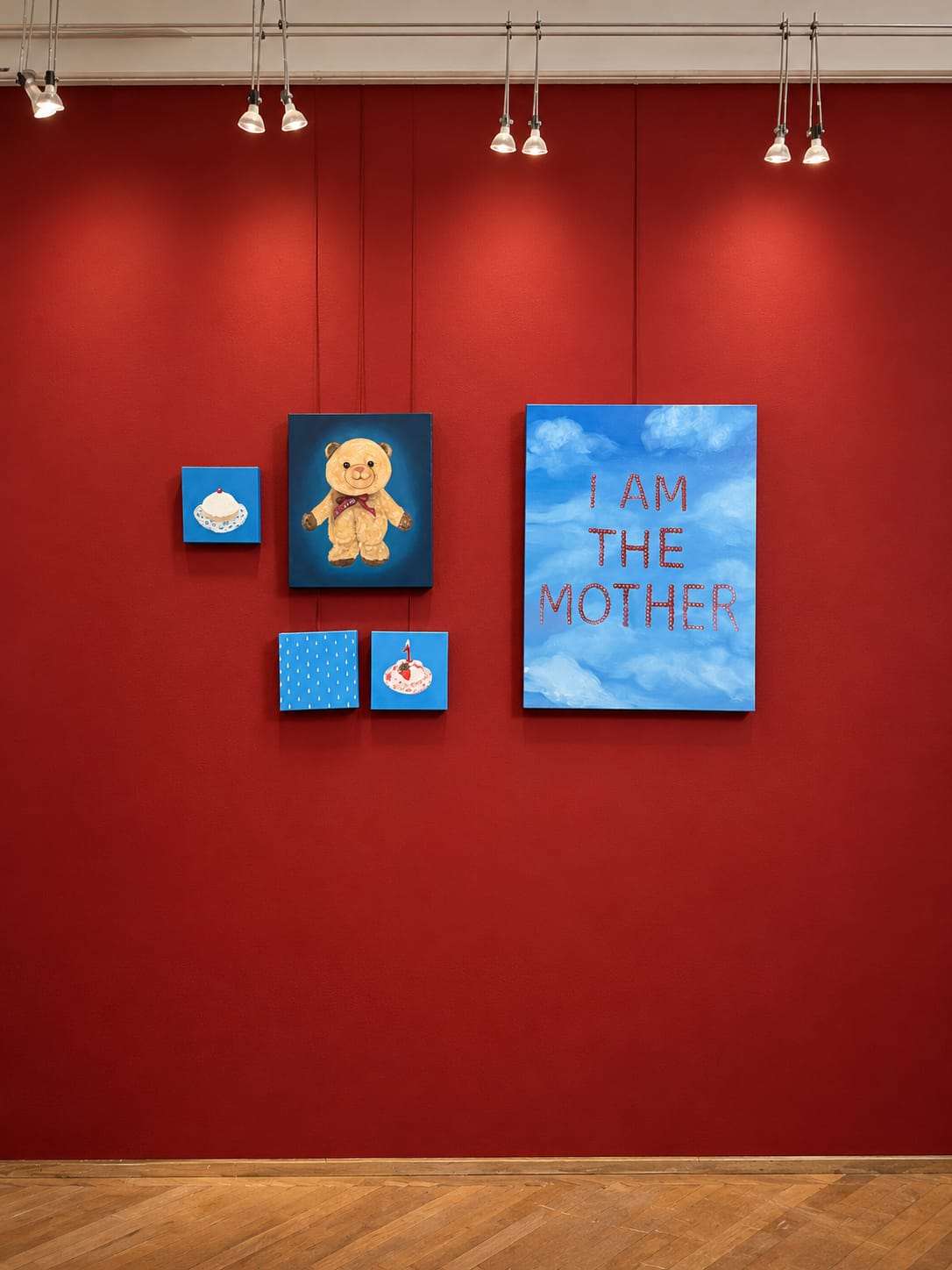
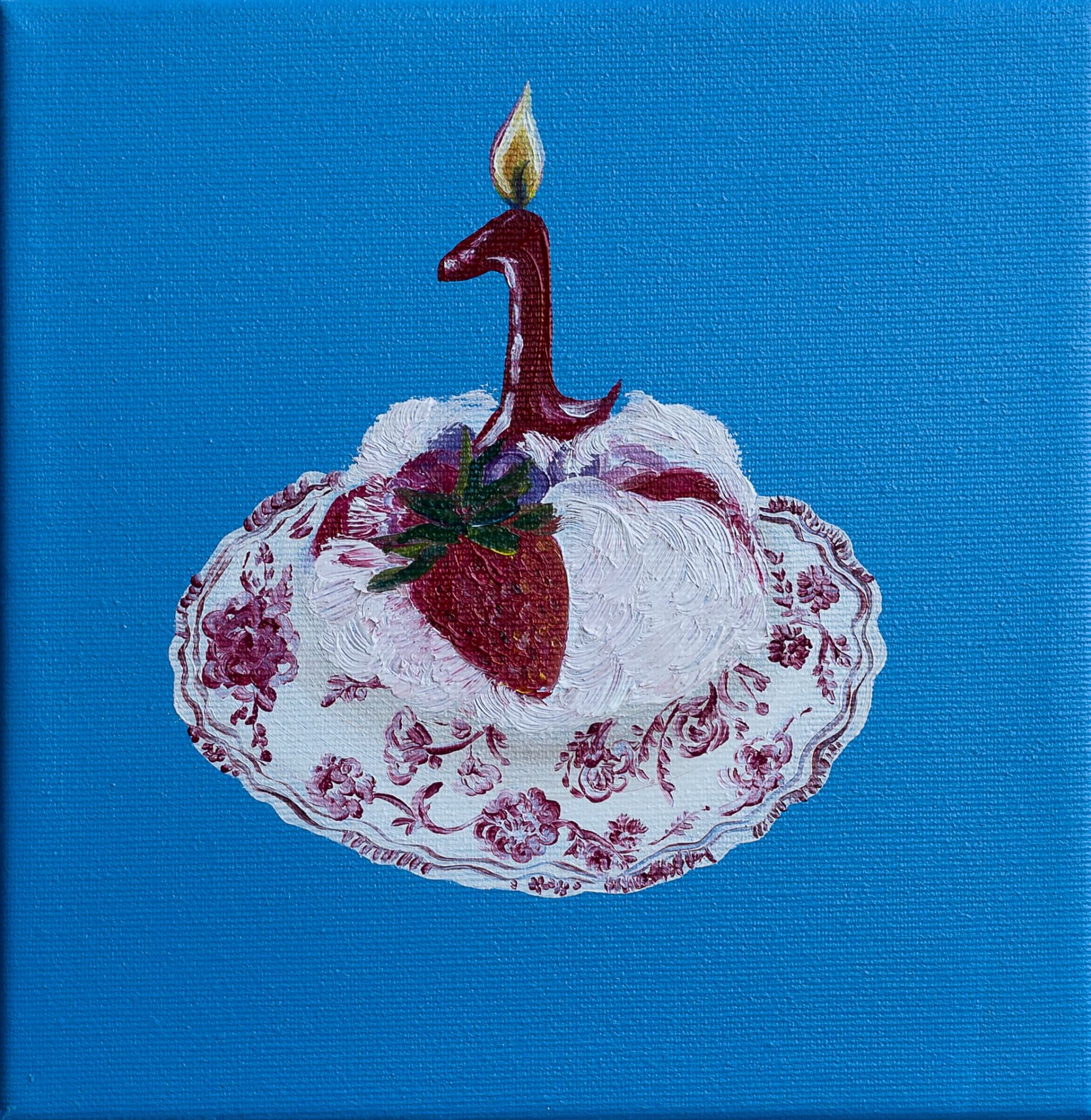
12 Miracles of Motherhood

Curatorial note

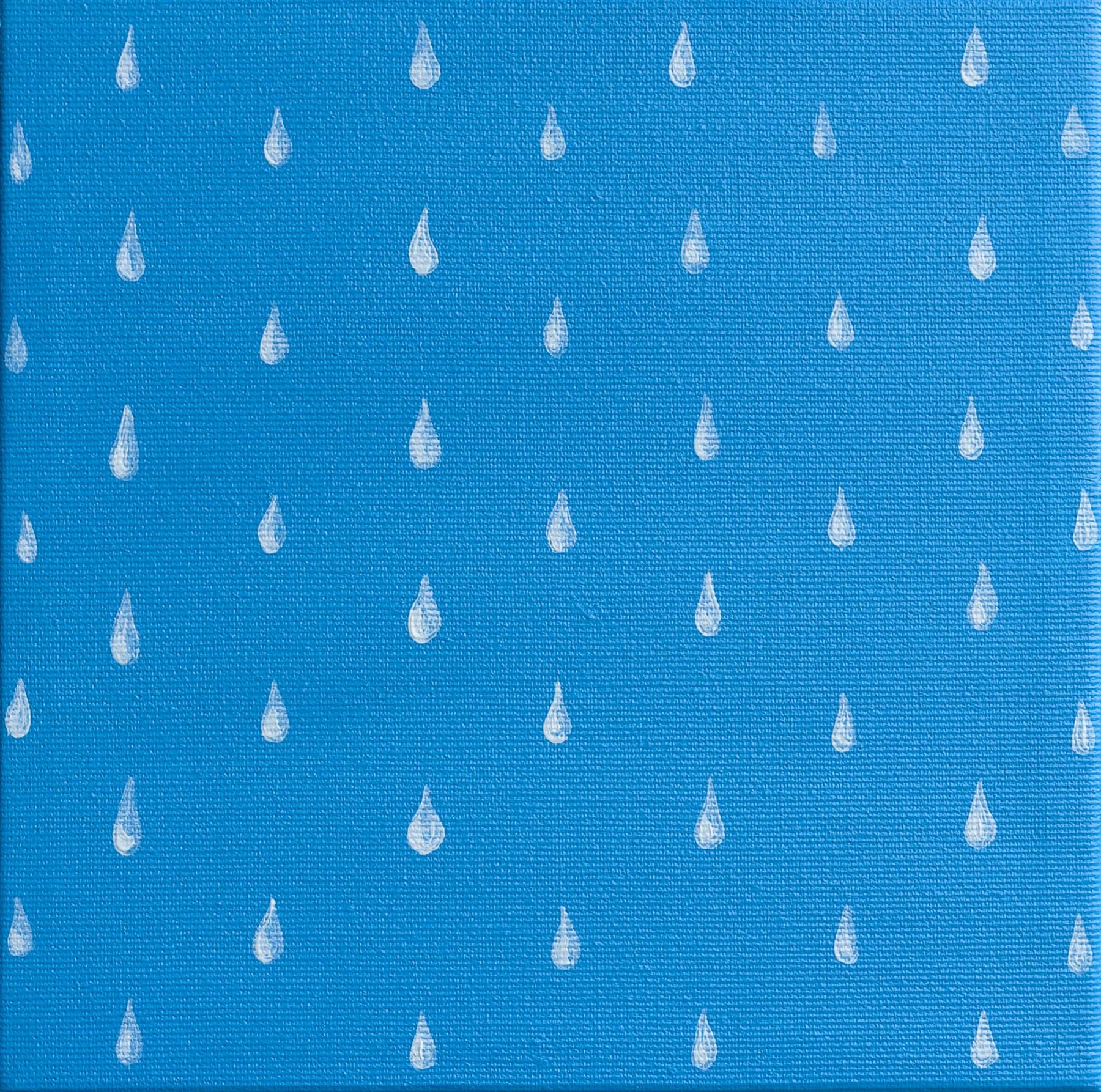
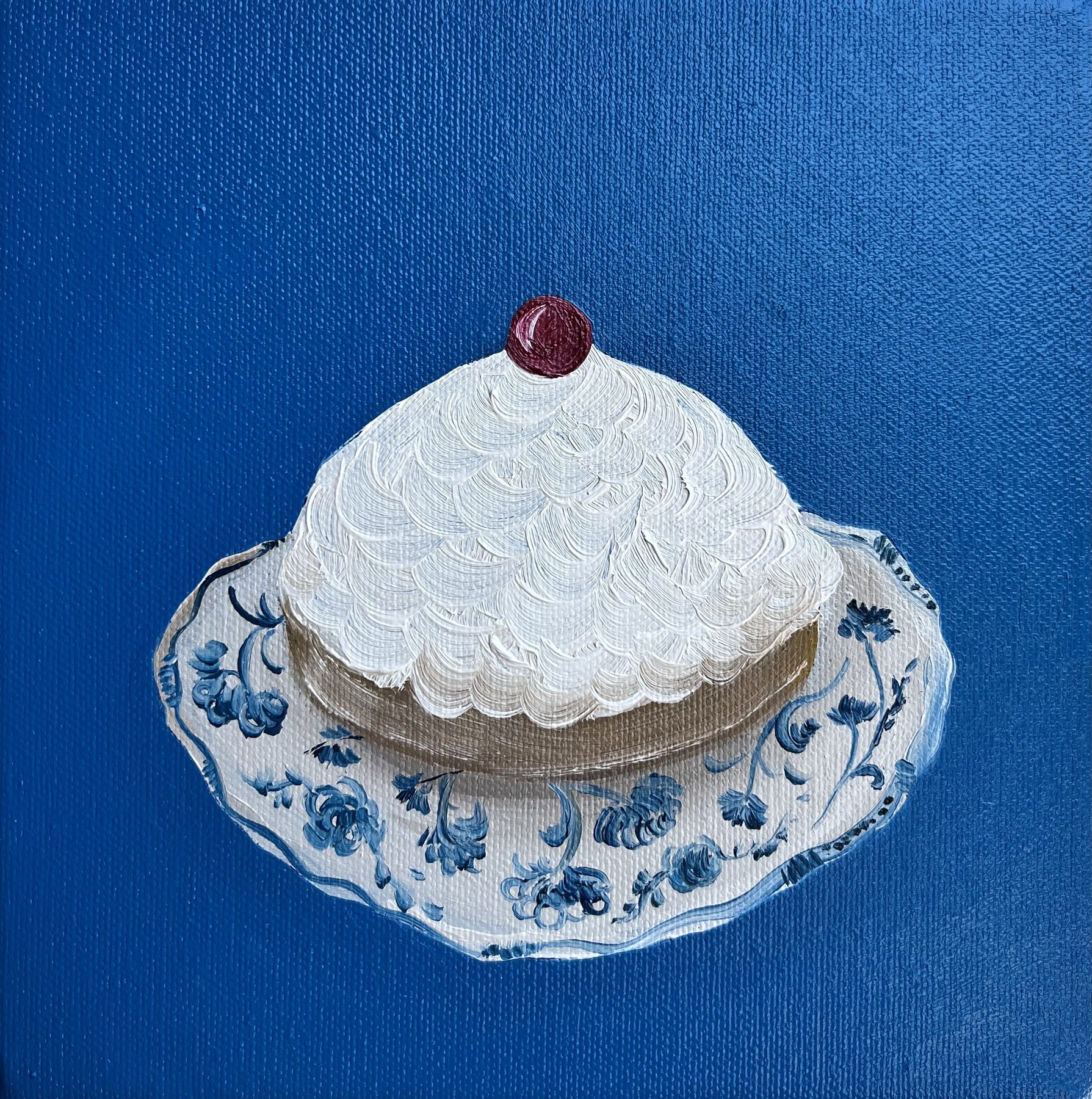
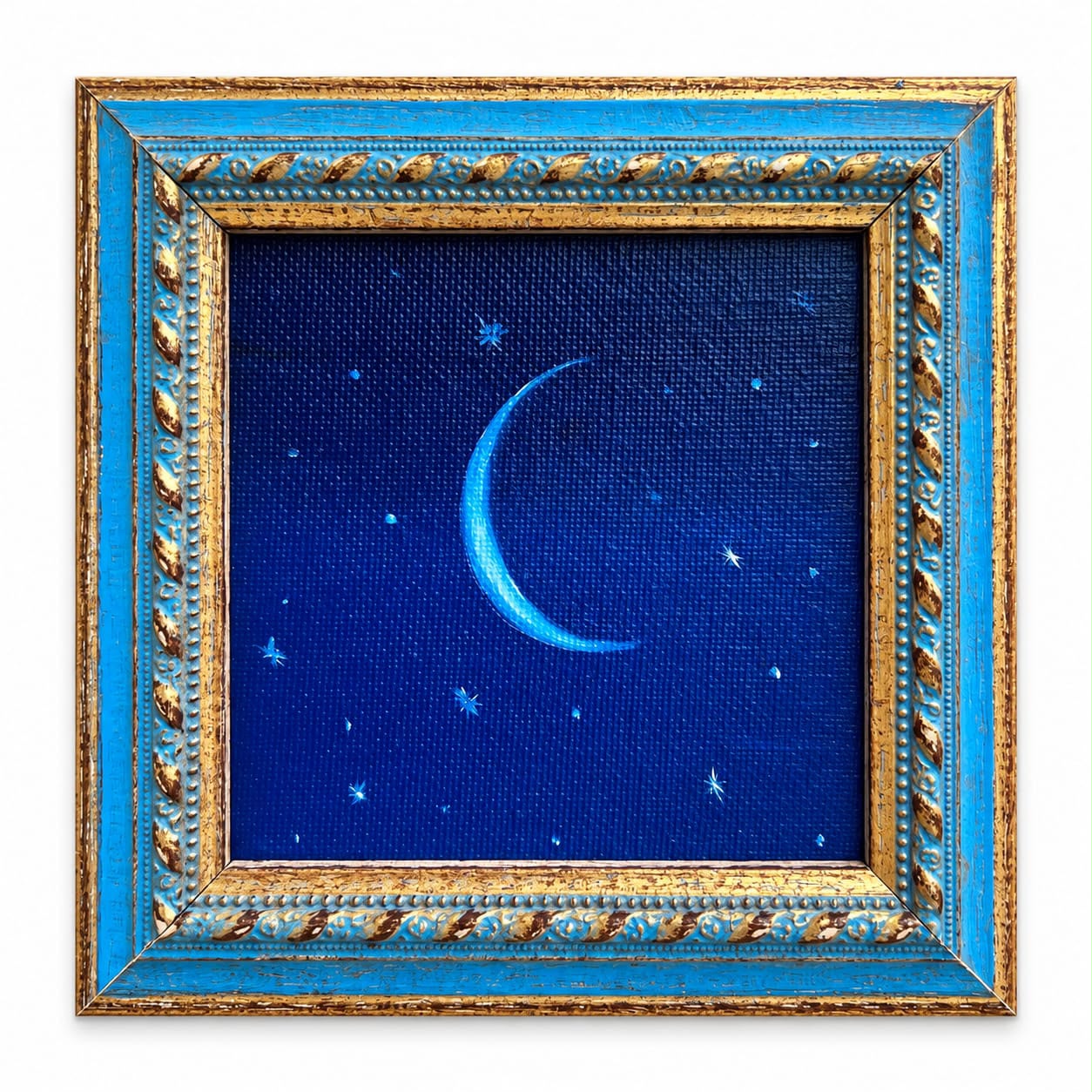
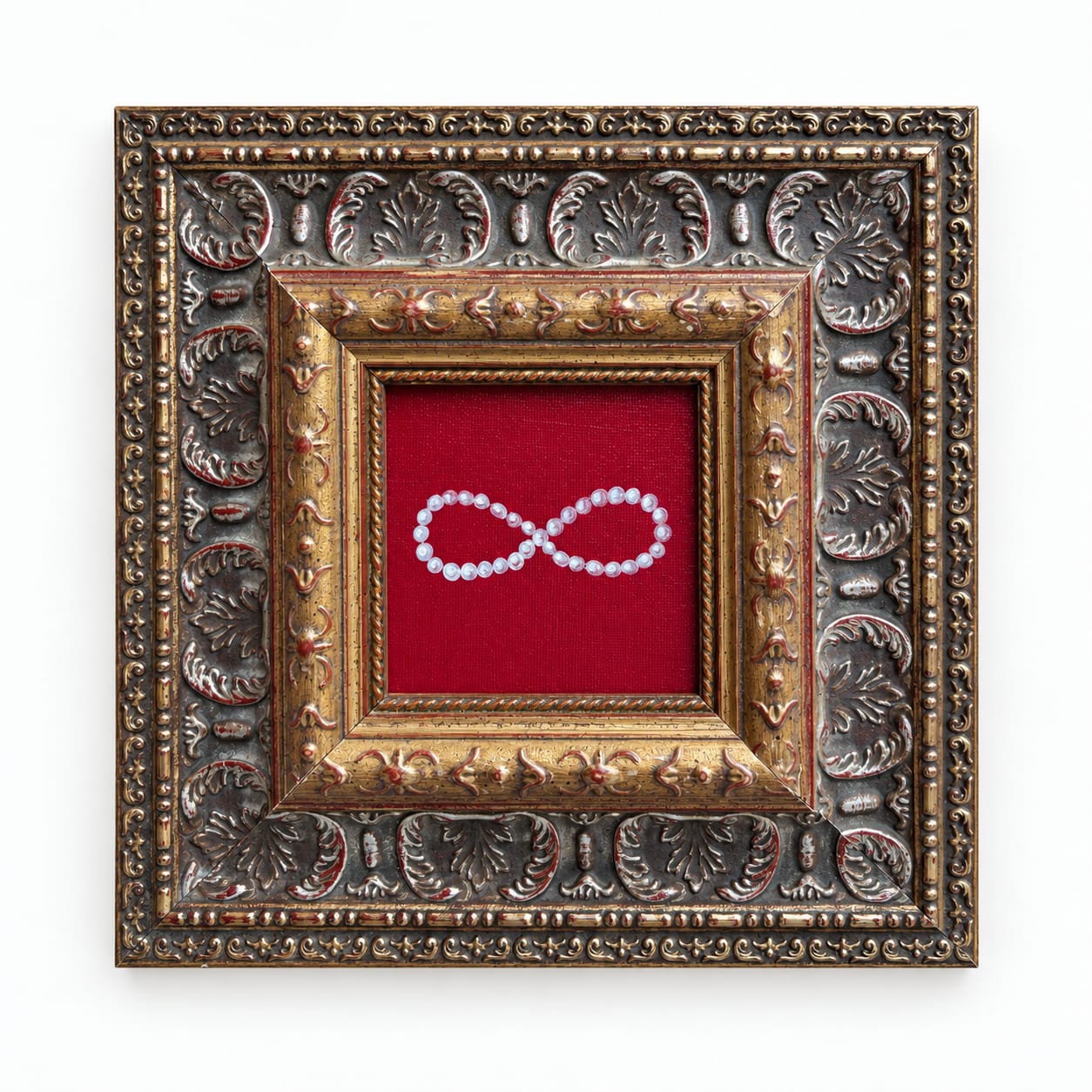
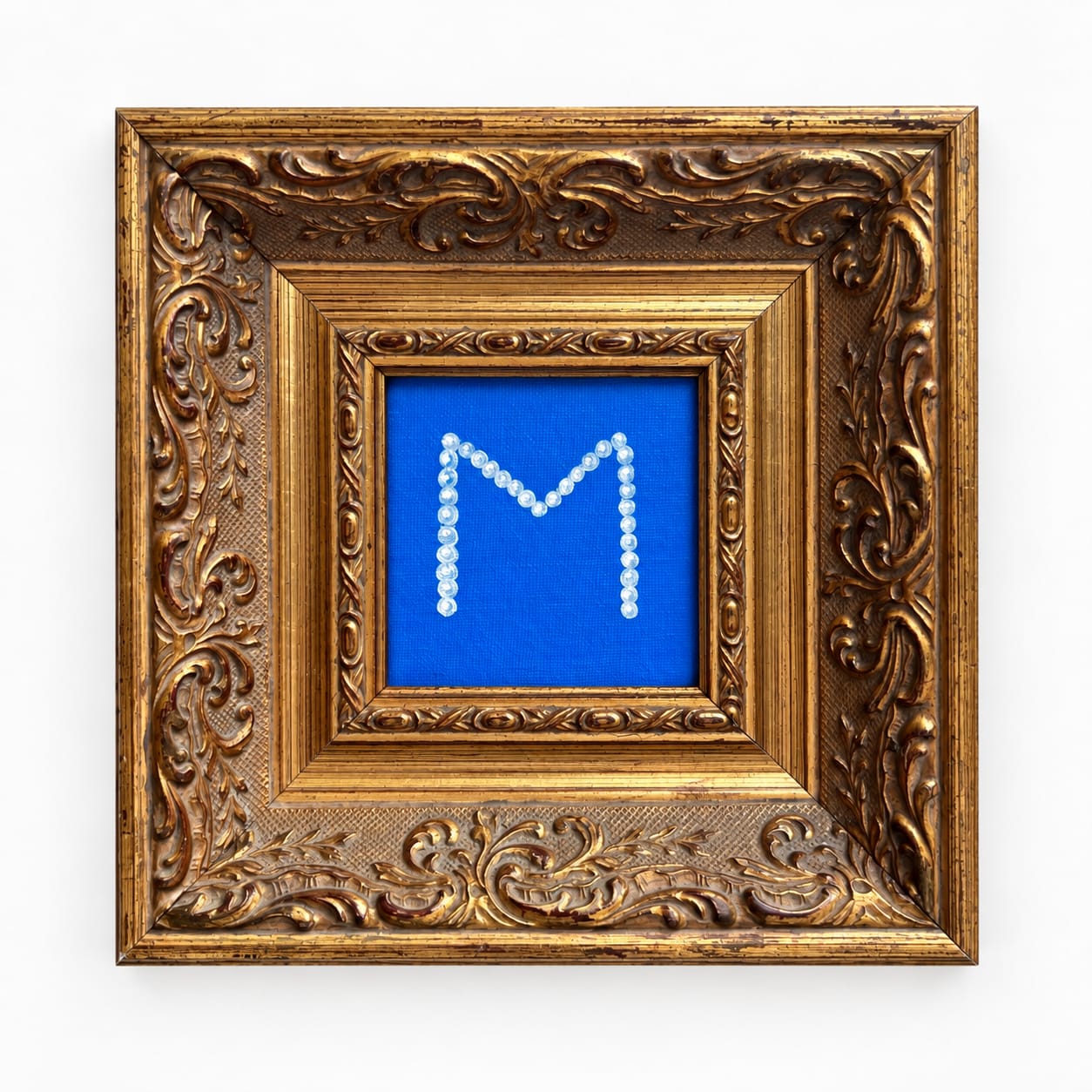
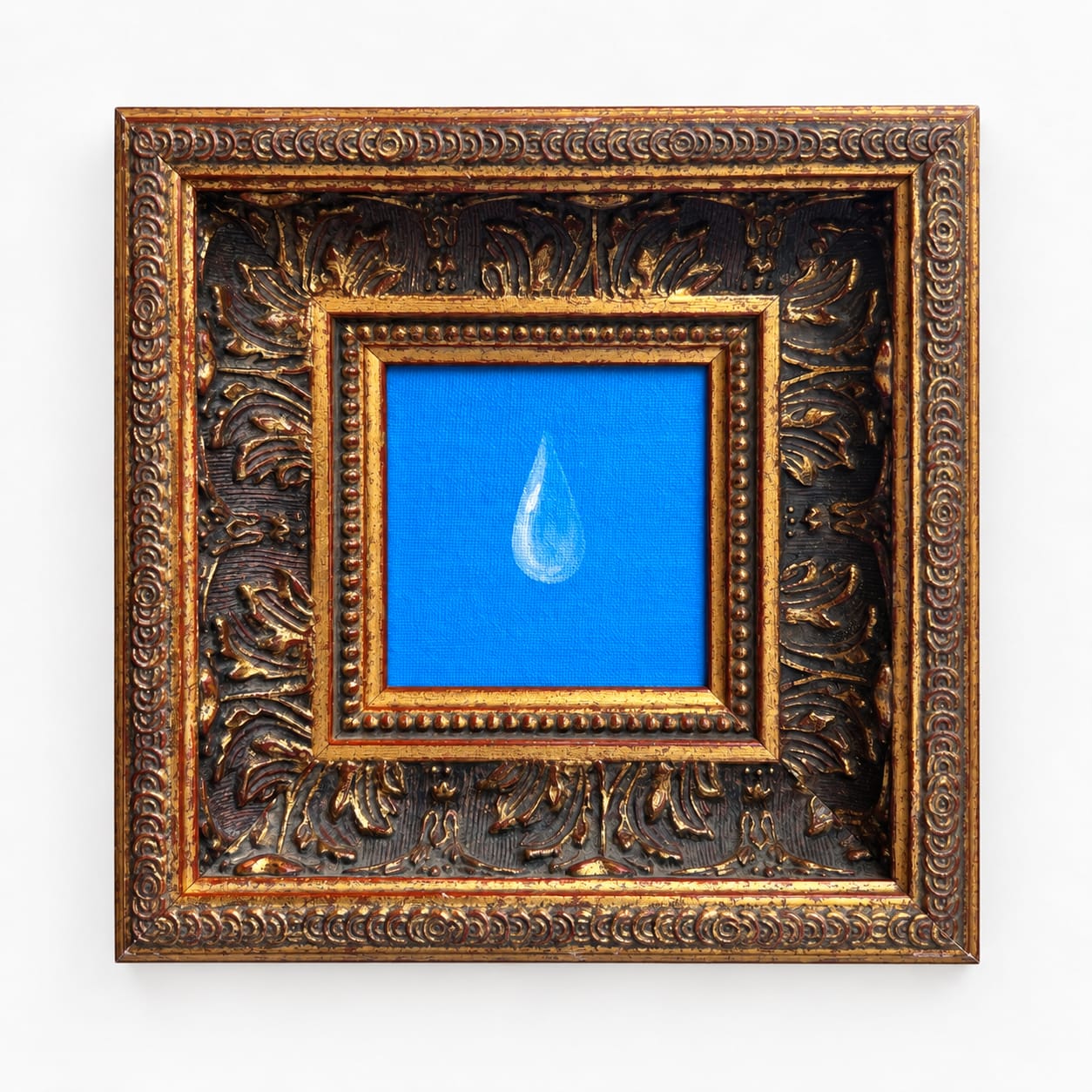
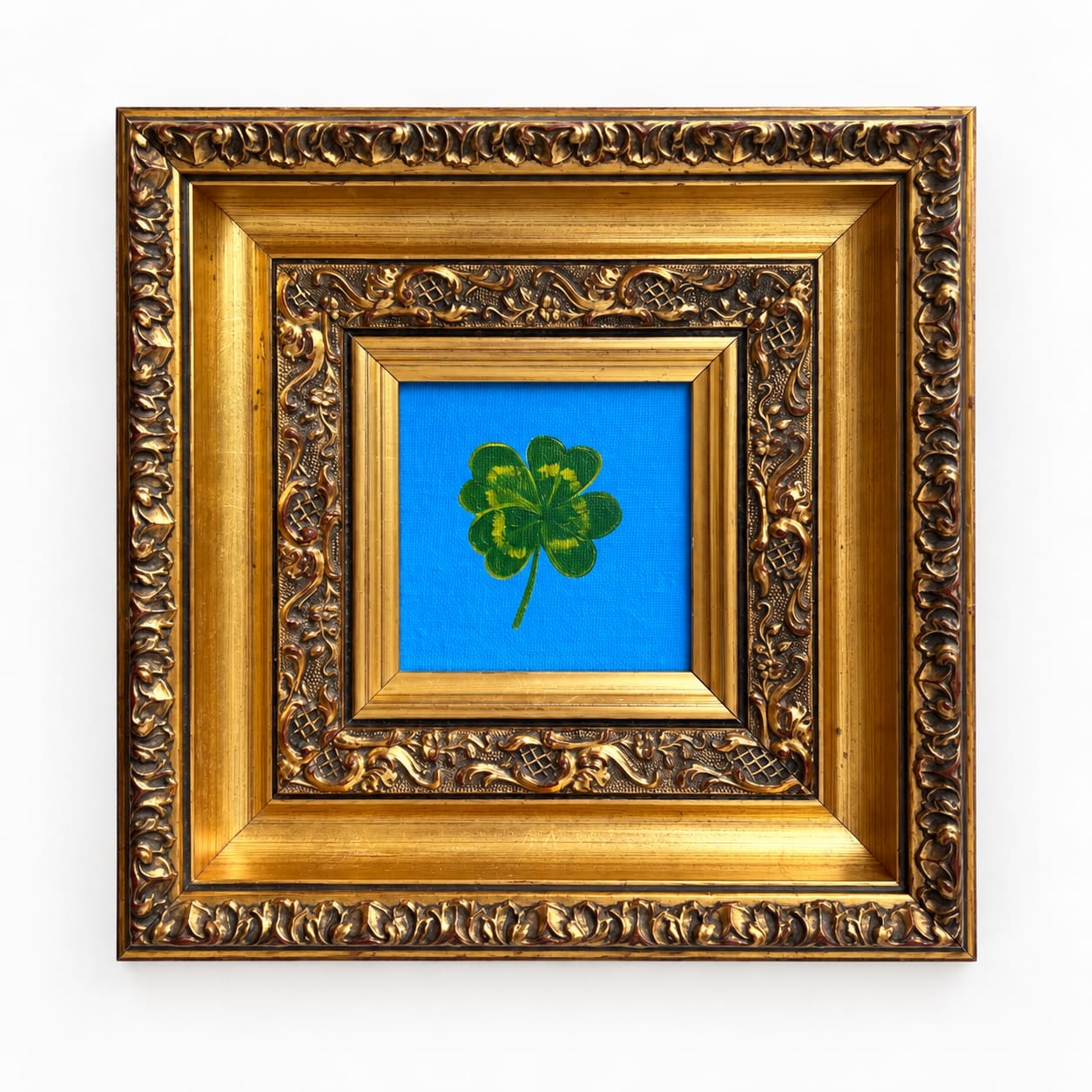
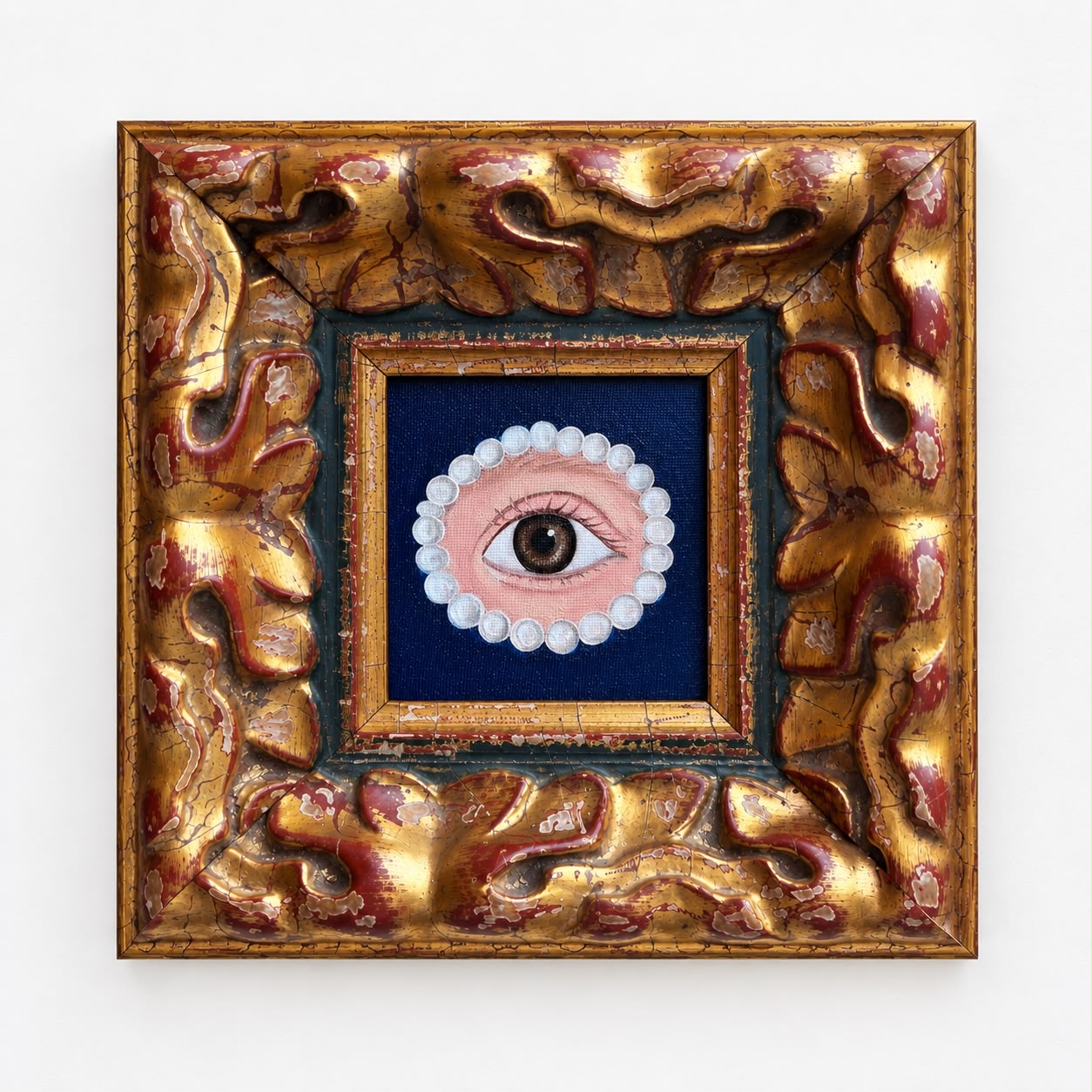
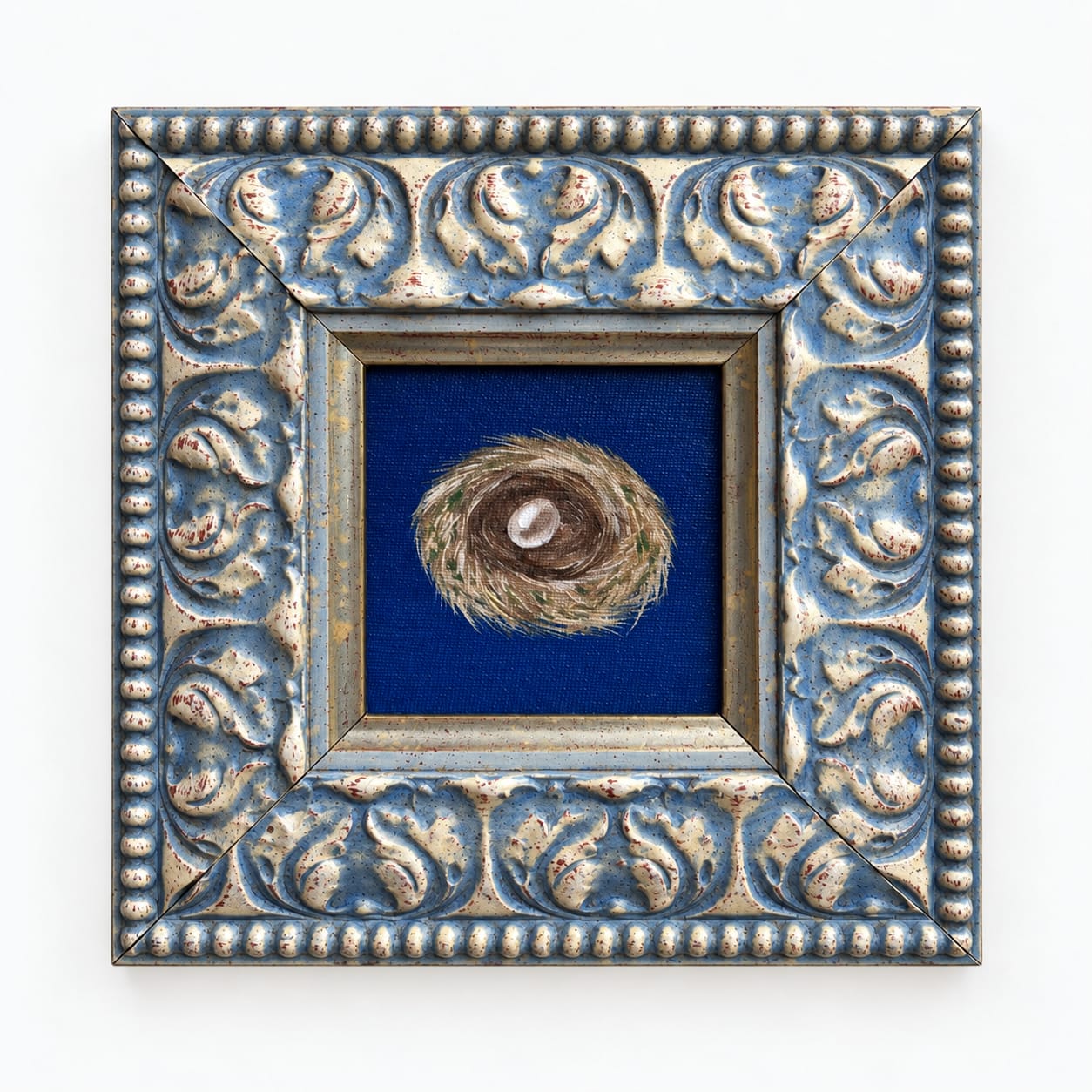
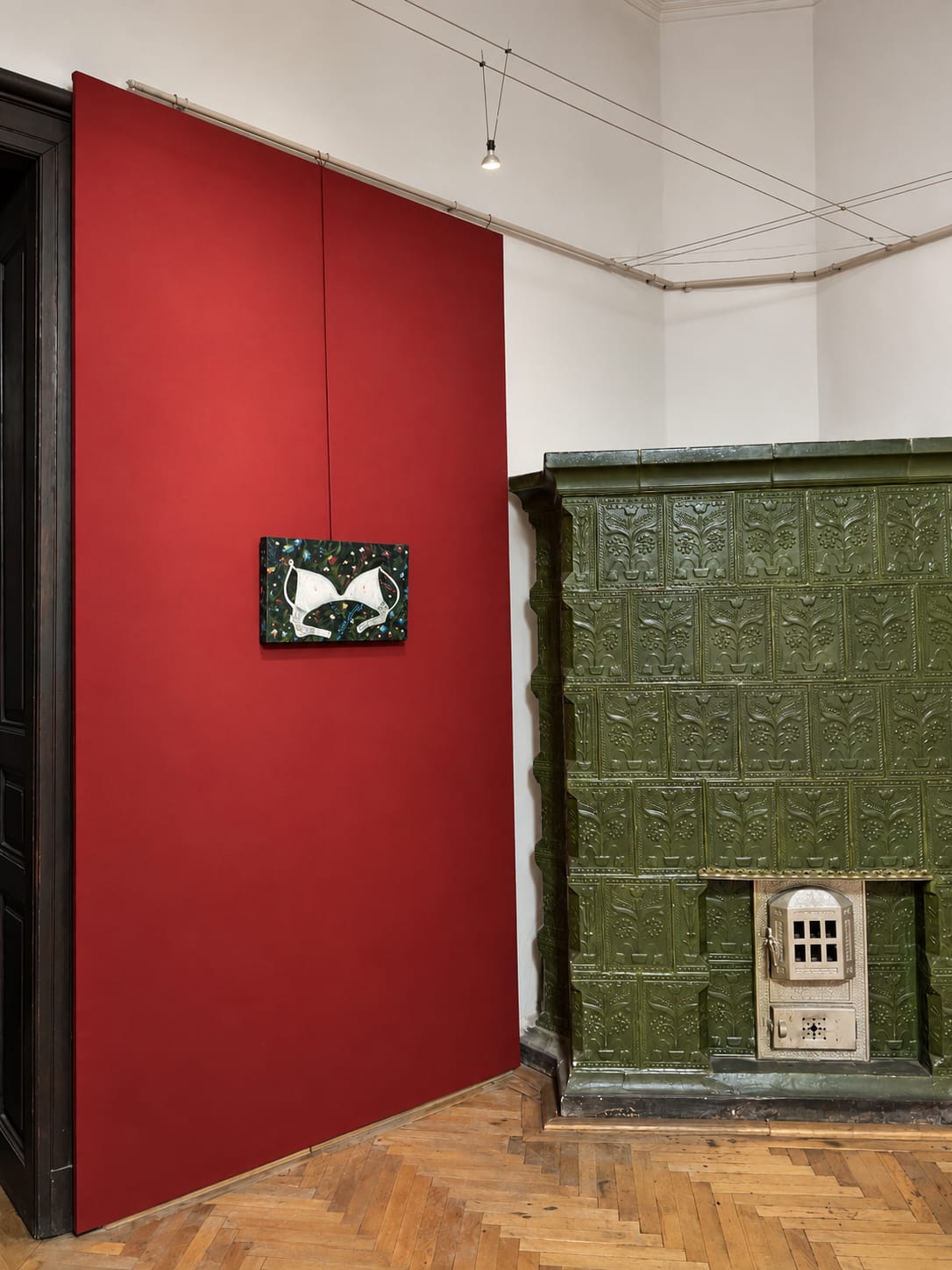
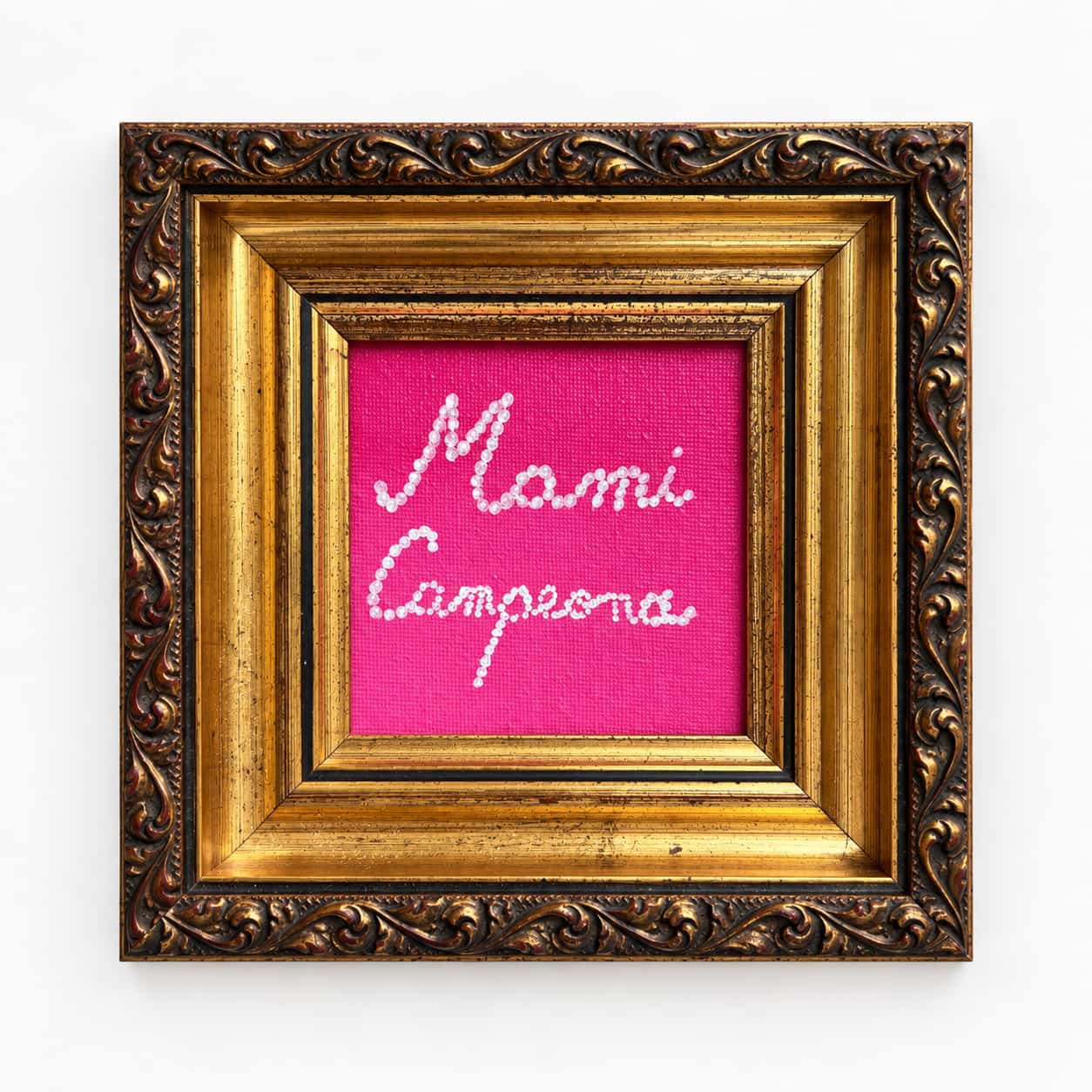
The twelve miniature works come together to create an emotional calendar of motherhood, in which each image can be symbolically associated with a month in the child’s first year of life and, simultaneously, with a stage in the woman’s first year as a mother.

The series does not follow a strict chronology. Instead, it reconstructs motherhood through fragments: objects, symbols, gestures, states of mind and small everyday revelations. Sleep, feeding, waiting, crying, touch, fear and joy become units of measurement for a chronology perceived only by the mother, who is adapting to a new state of identity.

The twelve miniature works can also be read as entries in a visual diary. By remaining faithful to a reduced format, Elleny attempts to reproduce the rhythm and cadence of external, objective time, while each image bears witness to a subjective time — to deeply intimate and unrepeatable experiences — marking the mother’s “firsts”: the first sleepless night, the first painting made together, the first fear of a possible danger, and so on.

Each image corresponds to a new state of the mother: vulnerable, exhausted, protective, dreamy, anxious, tender, sometimes overwhelmed, and at other times surprised by her own capacity to adapt.

Curatorial note — Ioana Ciocoiu
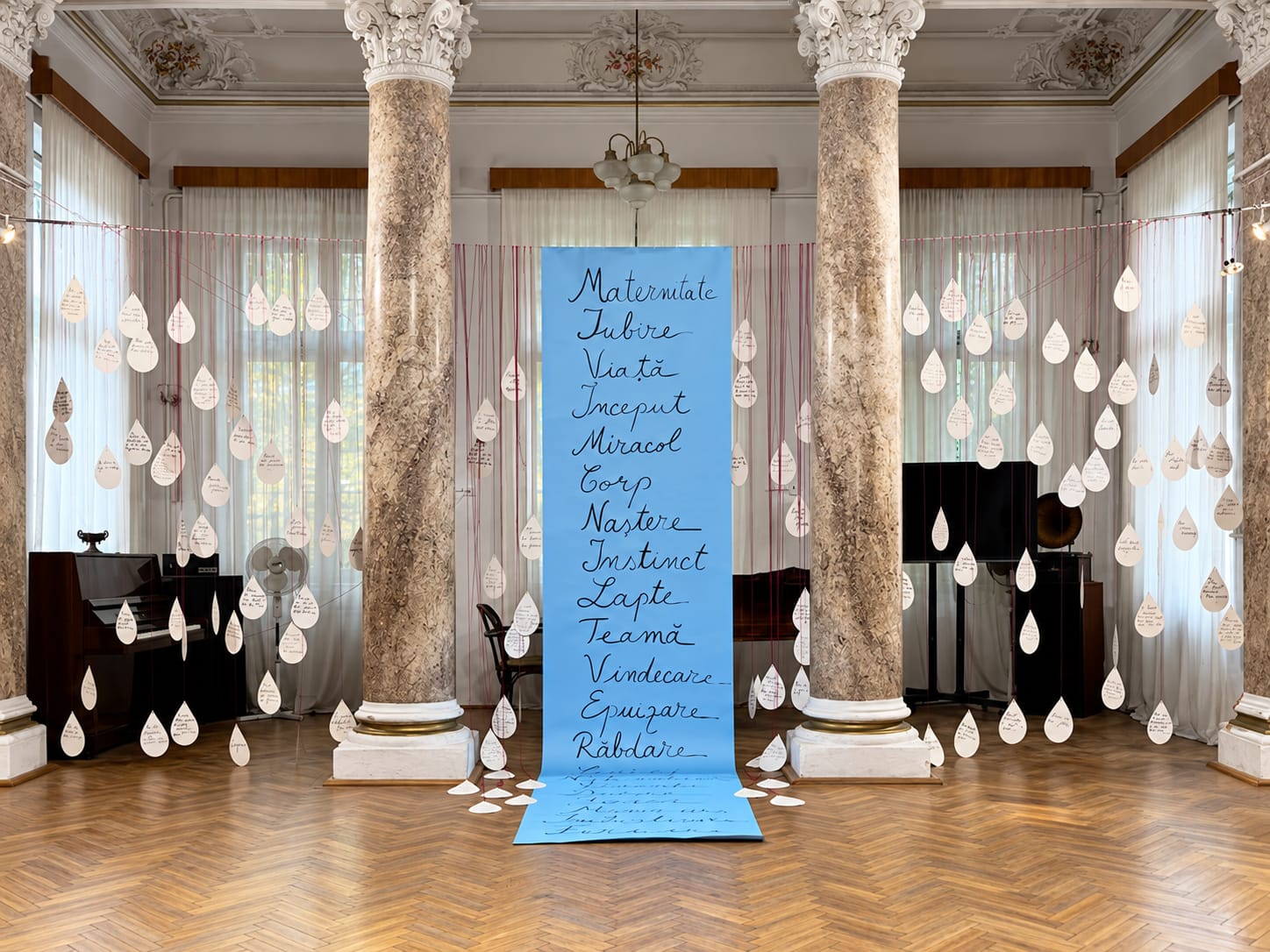
Art Installation — TAYUN

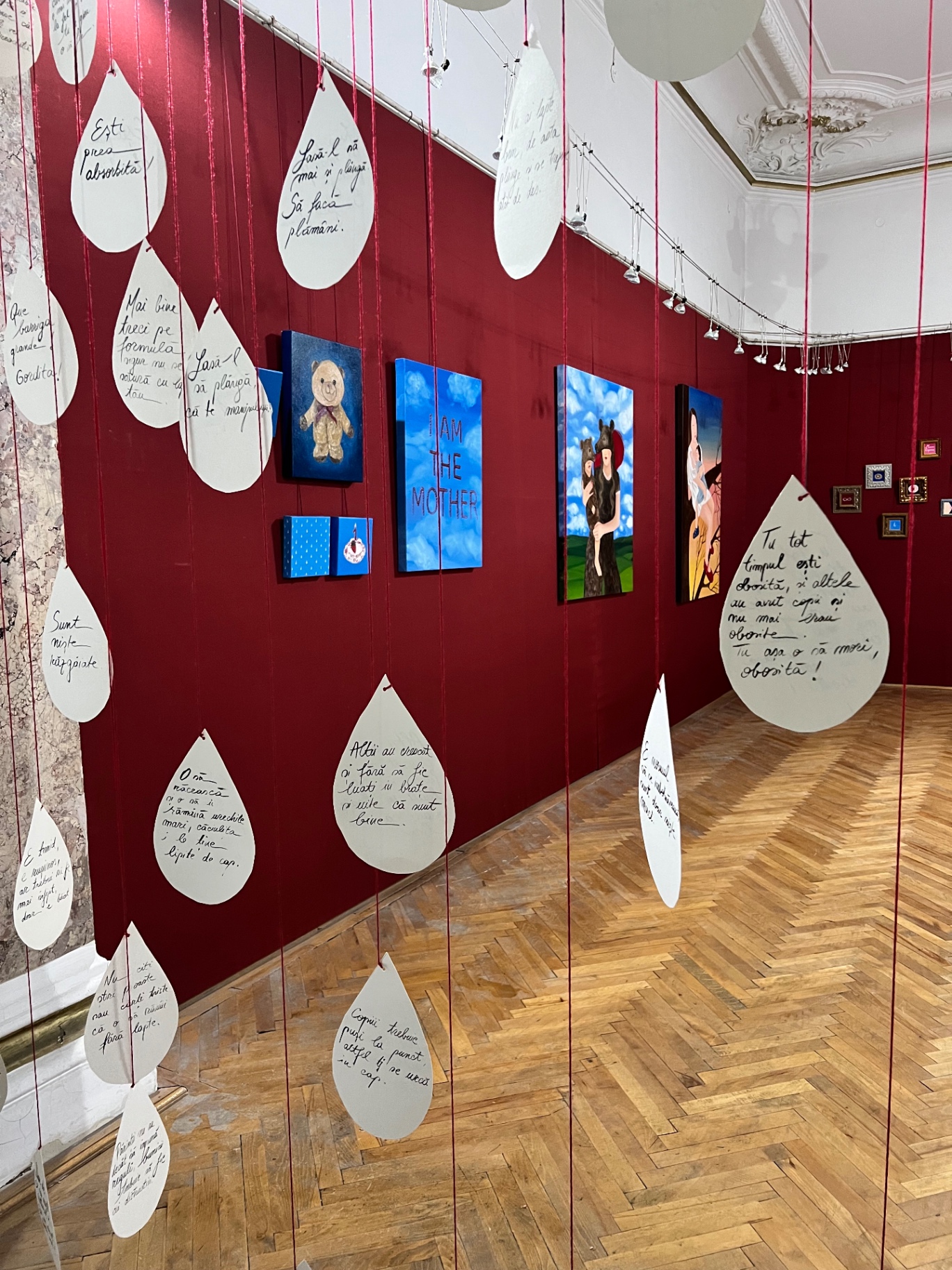
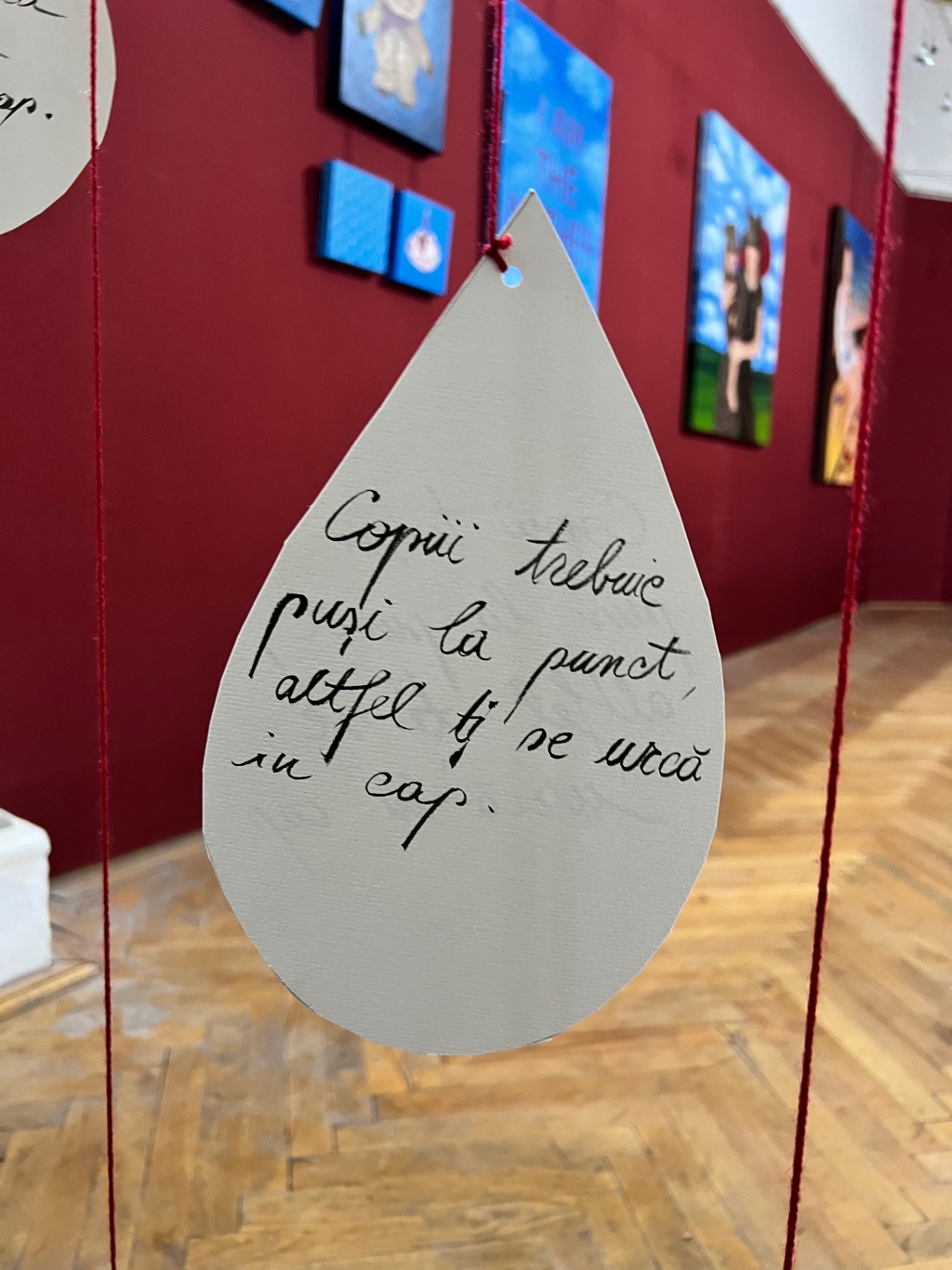
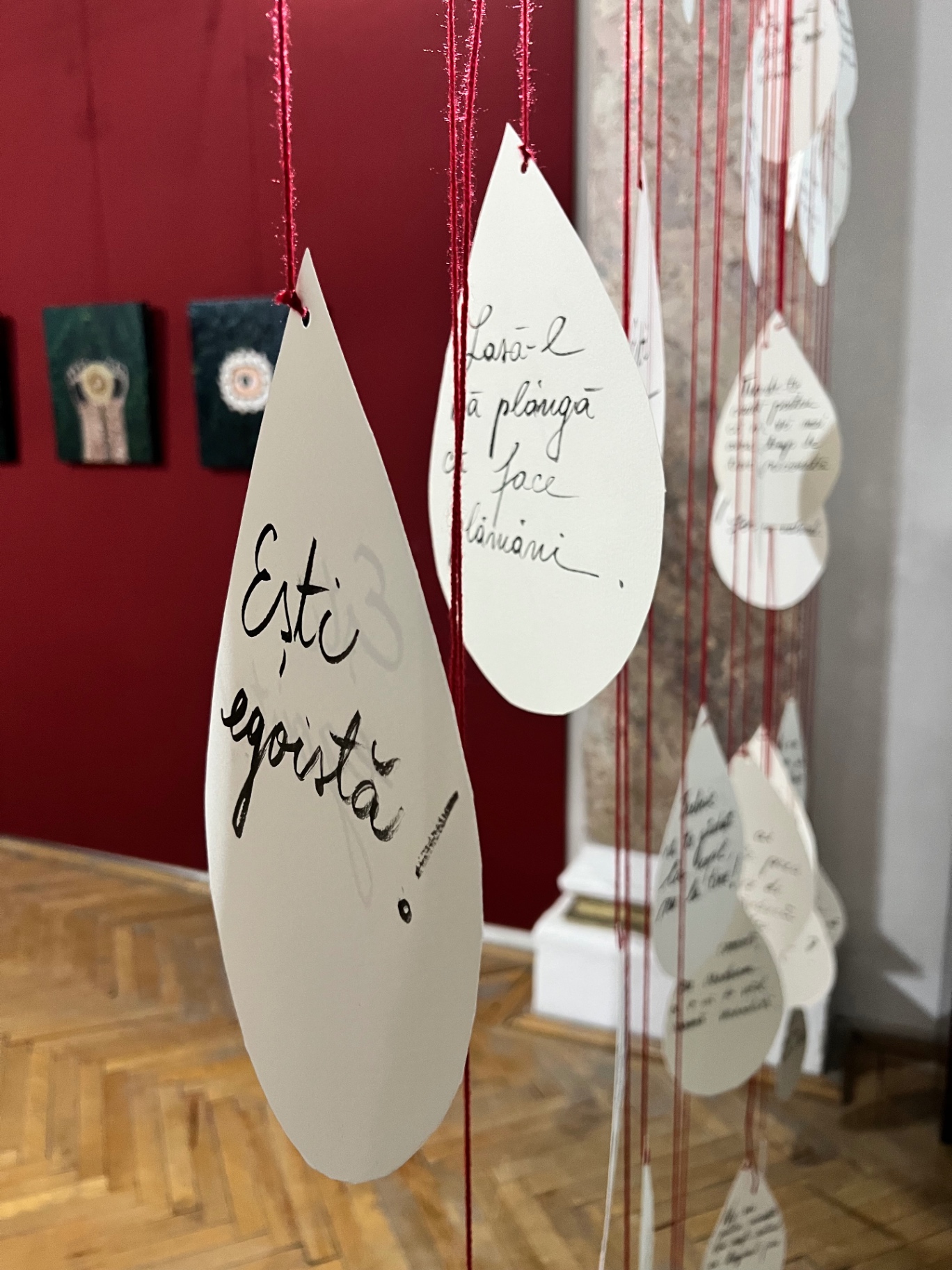
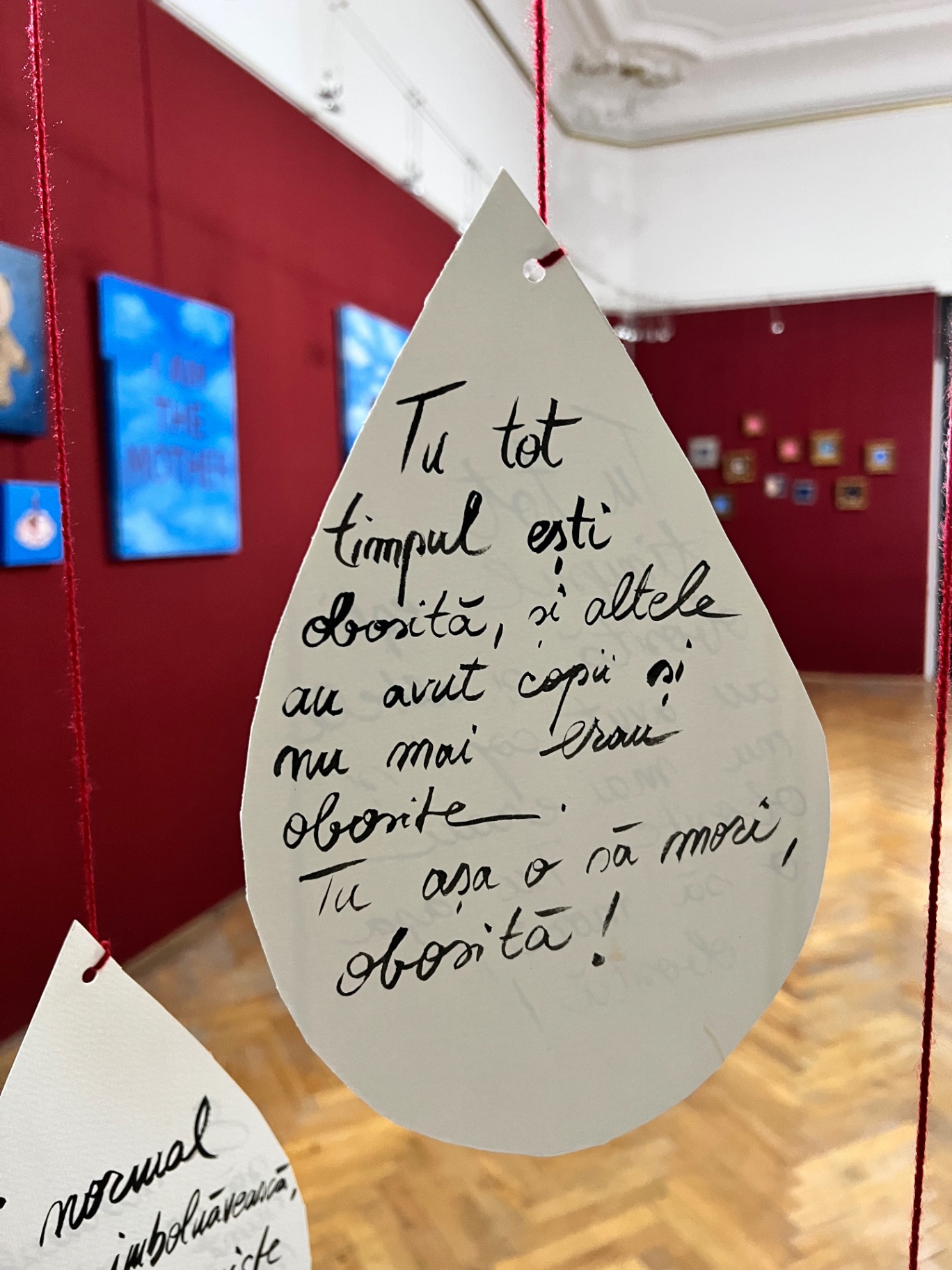
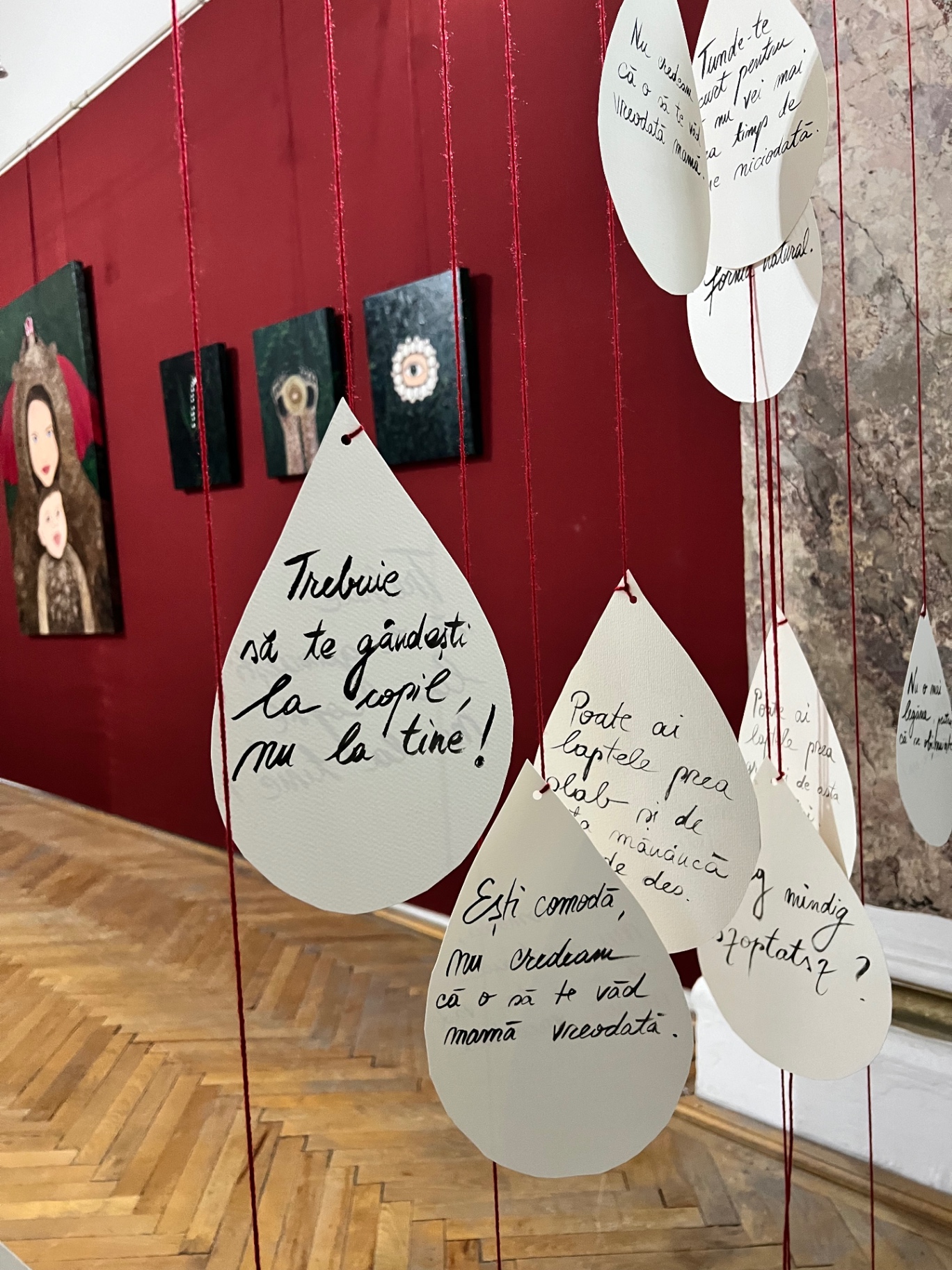
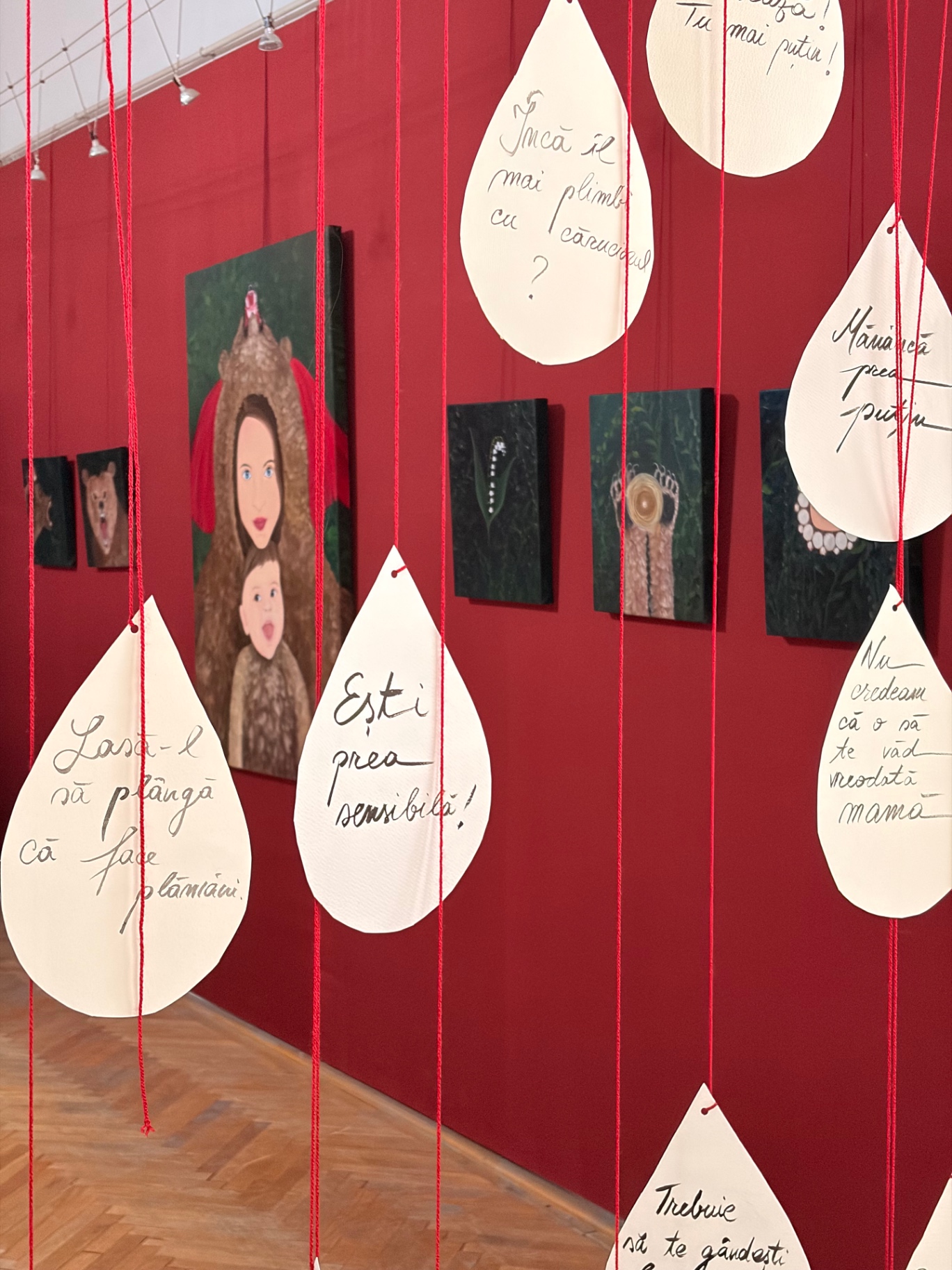
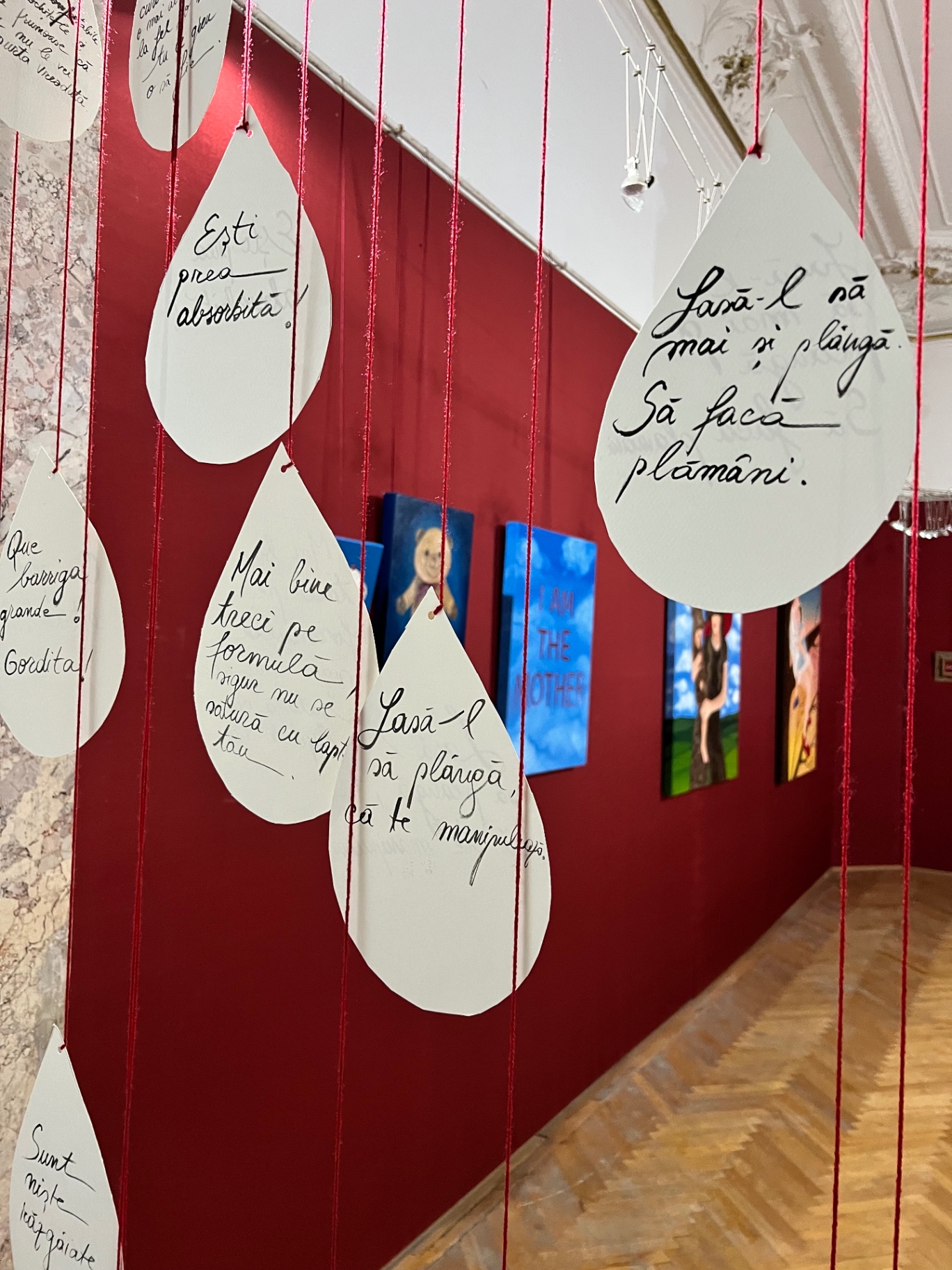
Tayun is an installation built from more than 100 unsolicited comments, judgments, remarks and pieces of advice about how mothers should raise their children.

Created from the voices surrounding motherhood, the work explores the invisible pressure placed on mothers — the constant feeling of being watched, corrected and judged. Tayun brings these voices together to create a space where mothers may recognize their own experiences and, perhaps, feel a little less alone in what they live and feel.

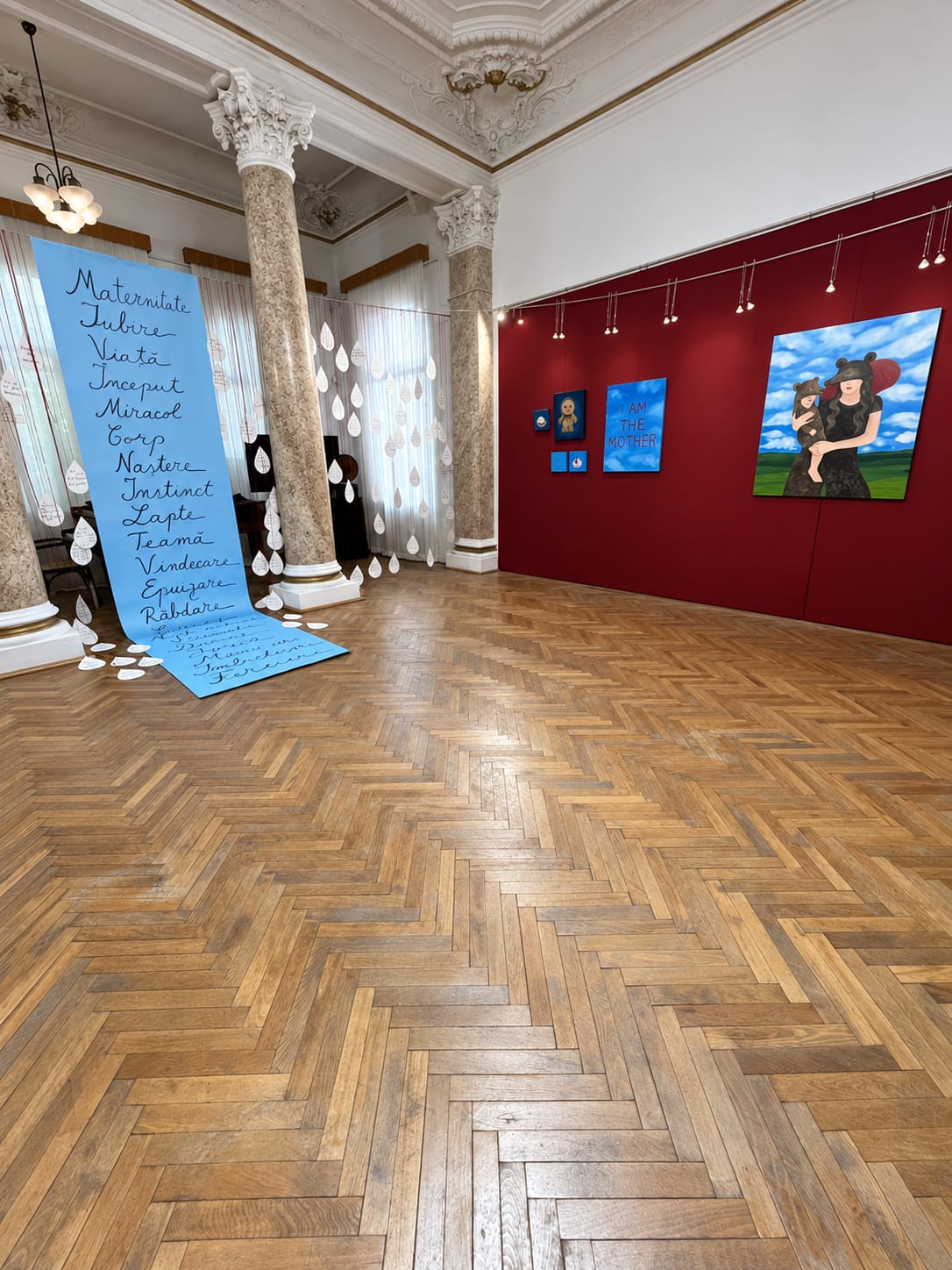
Tayun is not only a perennial plant, richly branched and known for its palliative properties, but also the central installation of the exhibition Motherhood and the Beast Within.

Constructed like a bush, the installation develops through a network of branches carrying fragments of speech: remarks, judgments, reproaches and unsolicited advice addressed to young mothers. Some may initially appear banal or even well-intentioned; others are explicitly unkind. Together, however, they form a vocabulary of the social pressure that accompanies motherhood:

“You’re not holding him properly.”

“You spoil him too much.”

“You’re not feeding him correctly.”

“Back in our day, it wasn’t like this.”

“A good mother should know.”

In Tayun, language takes the symbolic form of a snake, its venom concealed within aggressive speech disguised as well-intentioned advice. It is precisely this ambiguity that makes the aggression difficult to identify and, at times, impossible for a young mother to reject without experiencing guilt.

Tayun reverses the roles of the one who needs protection and the one who is expected to provide it. Who protects the mother who protects?

The branches that should offer shelter become supports for the voices of others, while the intimate space of motherhood is invaded by a collective discourse about what it means to be a “good” mother.

The installation takes this ambiguous image of vegetal refuge — a space that protects while simultaneously concealing a possible threat — and transforms it into a metaphor for the experience of contemporary motherhood.

Curatorial note — Ioana Ciocoiu
TAYUN installation view 1
TAYUN installation view 2
TAYUN installation view 3
TAYUN installation view 4
TAYUN installation view 5
TAYUN installation view 6
TAYUN installation view 7

Installation Views

Motherhood and the Beast Within — installation view
Motherhood and the Beast Within — installation view with TAYUN
Motherhood and the Beast Within — installation view
TAYUN — installation view
Motherhood and the Beast Within — installation view